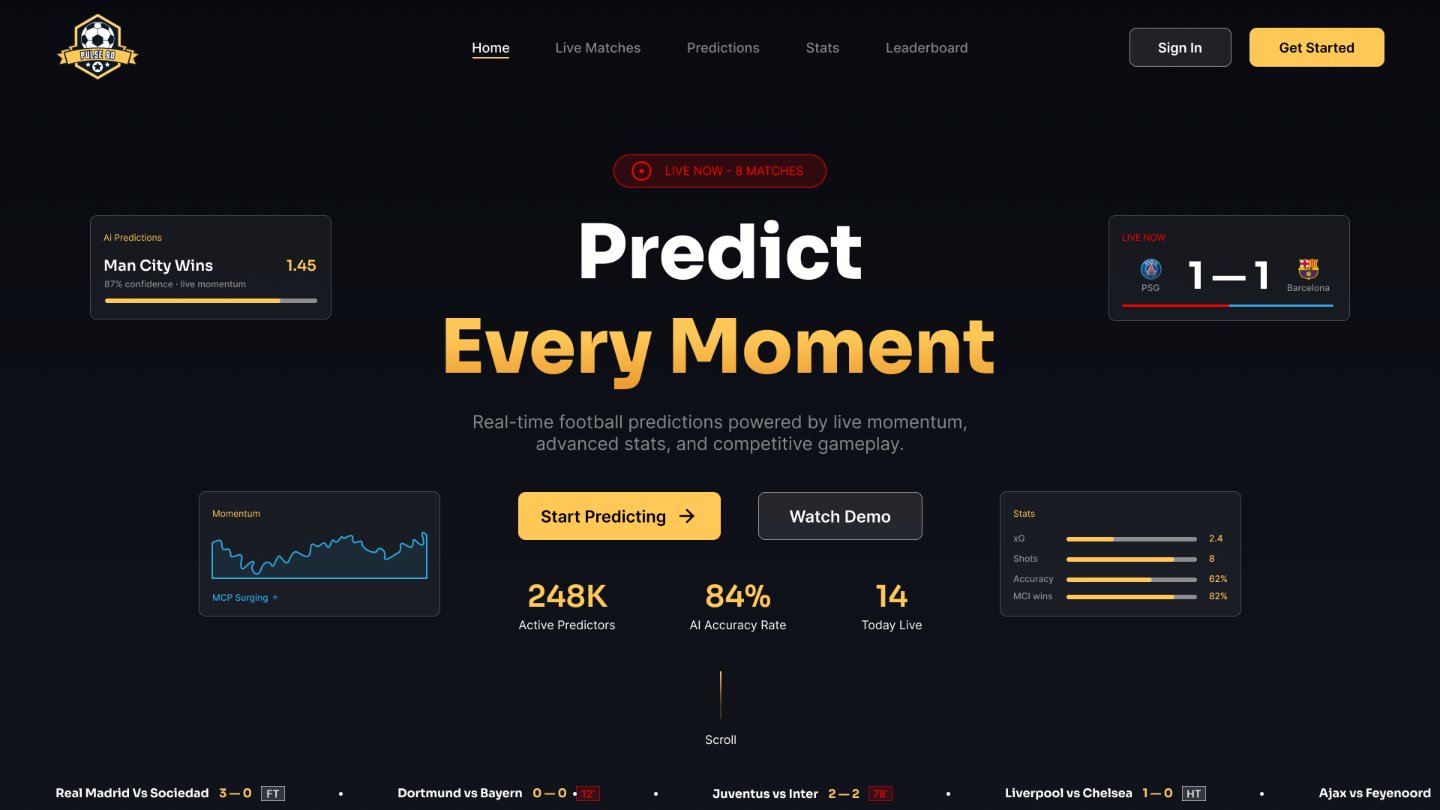
A football experience built around momentum, instinct, and live match intensity
Pulse 90 is a concept-driven sports prediction platform designed to transform live football engagement into a visually immersive and emotionally charged digital experience. The project explores how strong brand identity, live match intelligence, and scalable product systems can coexist within a modern sports ecosystem built for highly active football audiences.
Rather than positioning predictions as purely transactional interactions, the platform reframes live football engagement as an emotionally driven and community-oriented experience shaped by momentum, instinct, and live match intensity.
The project was designed to challenge the conventional visual direction commonly associated with sportsbook and prediction platforms by introducing a more cinematic, energetic, and identity-driven product ecosystem.
By combining real-time match tracking, prediction interactions, telemetry-inspired analytics, community competition, and cinematic sports storytelling — Pulse 90 creates a football experience that feels immersive, competitive, and visually recognisable across every touchpoint.
Breaking free from interchangeable sportsbook aesthetics
The sports prediction industry is heavily dominated by repetitive interface patterns and visually interchangeable product experiences. Many existing platforms prioritise information density and aggressive betting-focused layouts while often neglecting emotional engagement, recognisable visual identity, immersive interaction systems, and scalable brand consistency.
As a result, many sports products feel functionally useful but visually forgettable. The challenge behind Pulse 90 was to create a visually distinctive football prediction ecosystem that could balance real-time usability, immersive sports storytelling, scalable product systems, emotionally engaging interaction design, and recognisable brand identity within one connected experience.
The objective was not simply to create another sports dashboard, but to build a football ecosystem that feels alive during live match moments while maintaining clarity, hierarchy, and usability across complex live-data environments.
Underground football culture meets precision telemetry
The visual direction for Pulse 90 was inspired by the atmosphere and emotional intensity surrounding modern football culture. The identity system draws influence from underground football aesthetics, sports broadcast graphics, Formula 1 telemetry systems, competitive gaming interfaces, and modern sports entertainment platforms.
The goal was to merge the raw emotional energy of football culture with the structure and precision of scalable digital product systems. This resulted in a visual language built around layered dark surfaces, oversized typography, gritty textures, live-data overlays, telemetry-inspired visuals, cinematic contrast, and neon-accented highlights — creating a premium football intelligence aesthetic.
Deep, textured backgrounds that evoke the intensity of stadium atmospheres and night matches, creating visual depth without sacrificing legibility.
Data overlays and analytics visualisations drawn from F1 telemetry and broadcast sports graphics, making complex match data feel dynamic and engaging.
Neon green live-state signals and alert systems that communicate real-time match activity with immediate visual clarity and emotional urgency.
Restrained gold accents used for ranking, achievements, and premium prediction moments — reinforcing the competitive and aspirational nature of the platform.
Typography, colour, and motion working as one system
The Pulse 90 identity system was designed around the concepts of momentum, immersion, and competitive energy. Typography became one of the core elements shaping the platform's personality.
Used across hero headlines, live match scores, prediction moments, and major numerical hierarchy — establishing a bold, futuristic, and energetic visual tone that reflects the intensity of live football experiences.
Used throughout the product experience for navigation systems, live dashboards, telemetry interfaces, prediction modules, and supporting content — maintaining readability and scalability across data-heavy environments.
The combination of typography, colour, motion, and live-data elements helped establish a recognisable visual identity that scales consistently across both product and campaign touchpoints.
The colour palette was intentionally restrained to preserve hierarchy and recognisability. The system primarily relies on layered dark backgrounds, soft gradients, neon green live indicators, telemetry-inspired blues, sports-inspired alert reds, and premium gold highlights — creating strong visual emphasis during active live states.
A visual language that scales beyond the dashboard
A major focus of the project was exploring how the Pulse 90 identity system could scale beyond the core product experience. The visual language was extended across campaign posters, environmental graphics, collectible-style prediction cards, editorial sports visuals, responsive website assets, and digital product marketing materials.
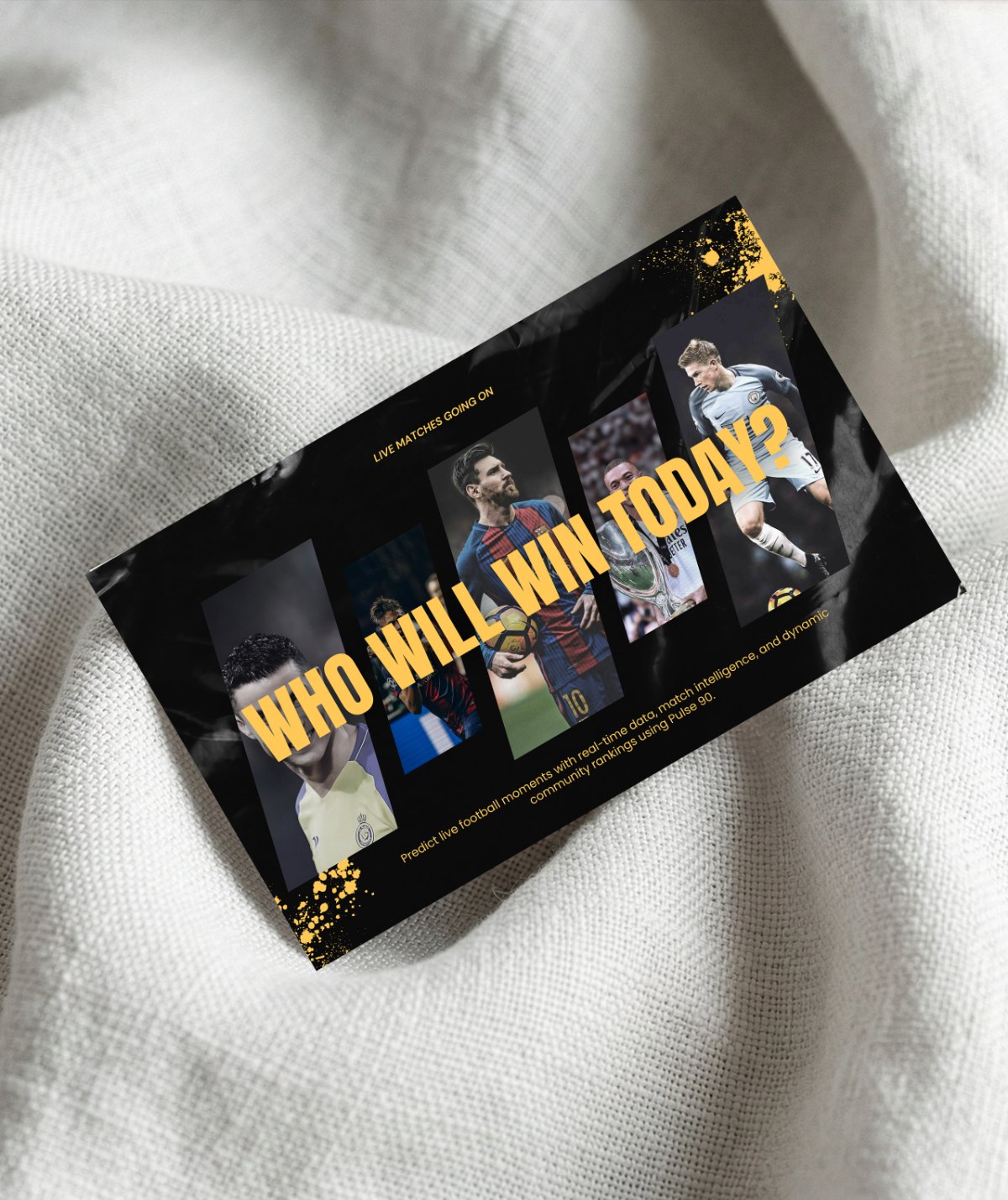
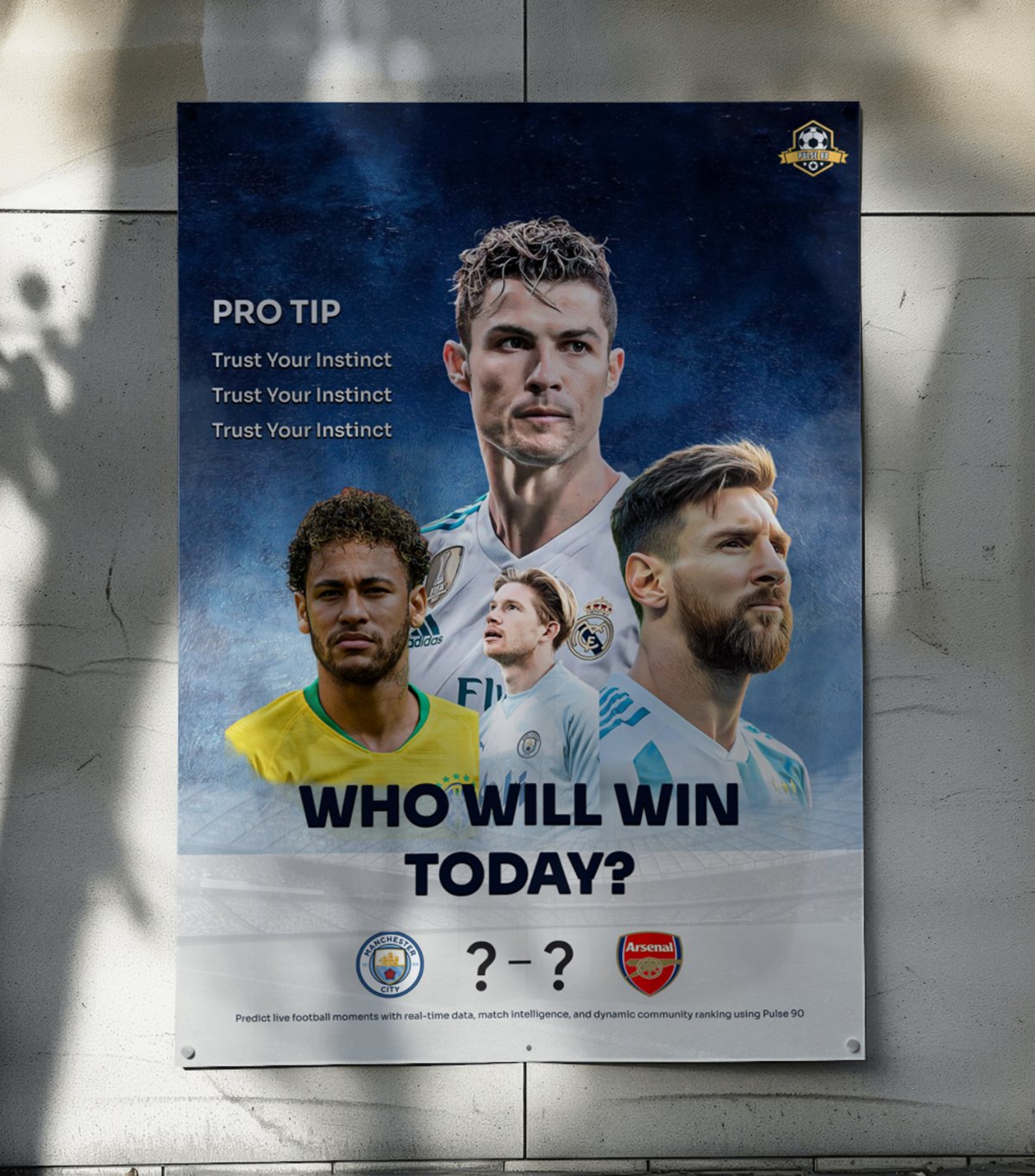
This helped position Pulse 90 as a flexible and scalable sports identity capable of adapting fluidly across multiple audience interactions while maintaining one cohesive visual language.
A connected multi-page ecosystem for live football engagement
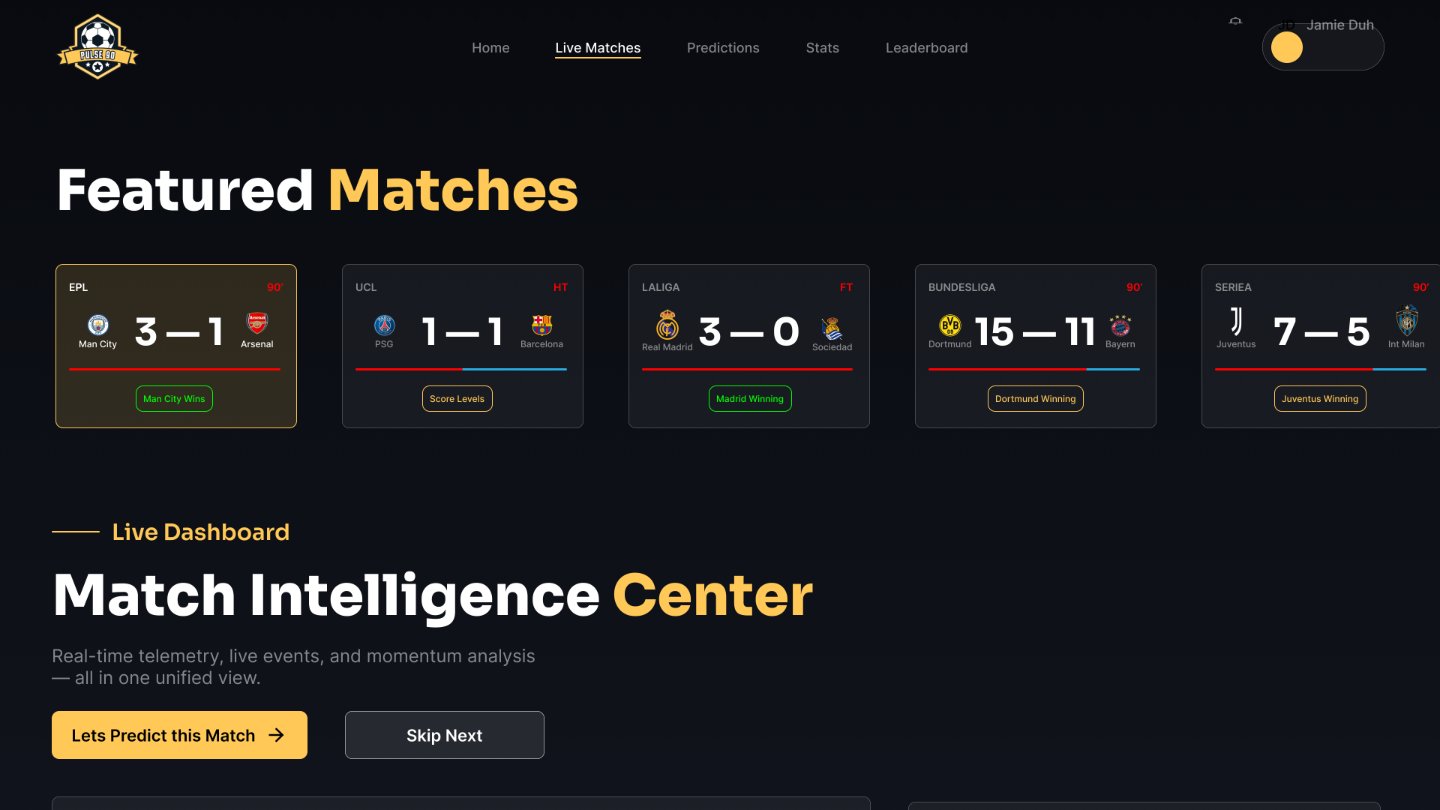
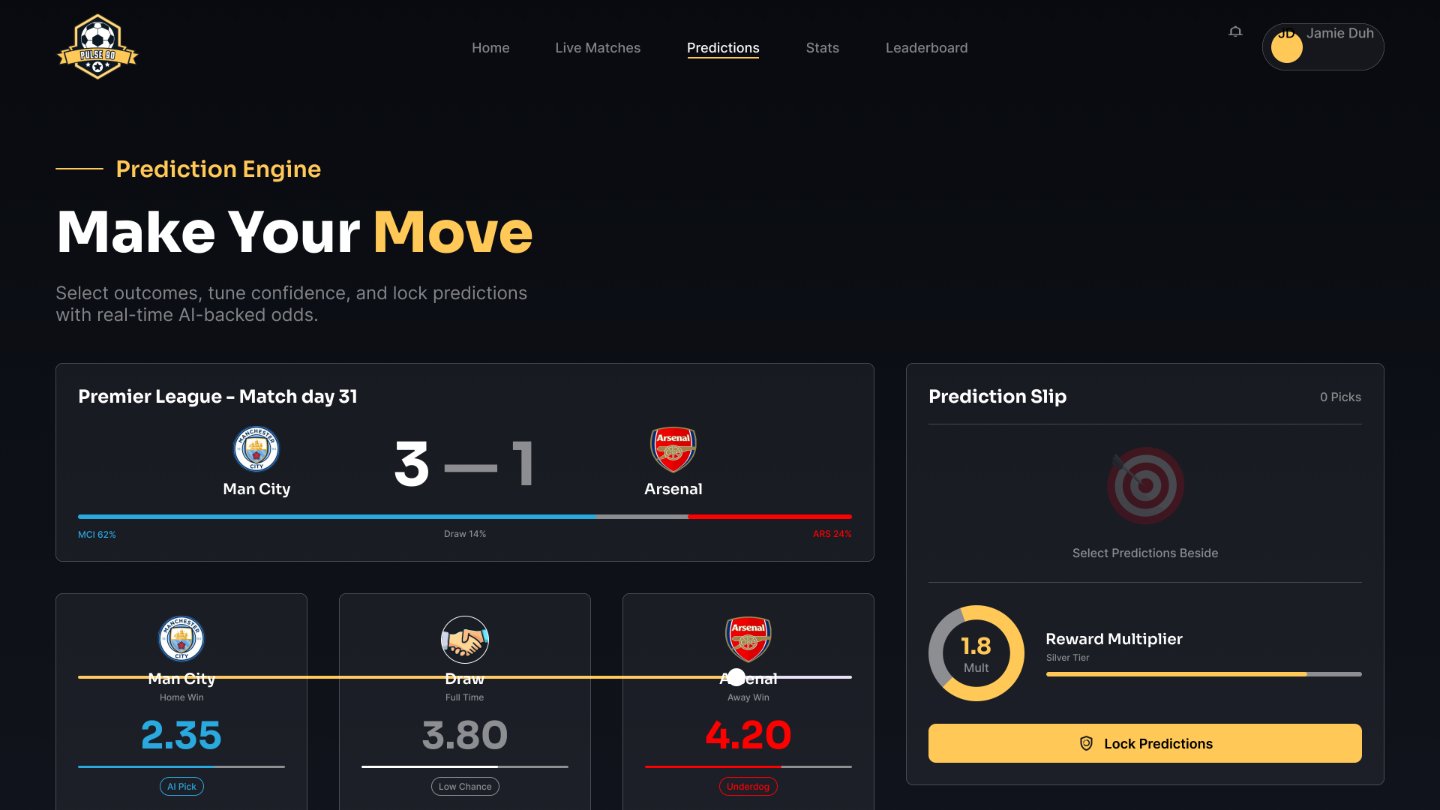
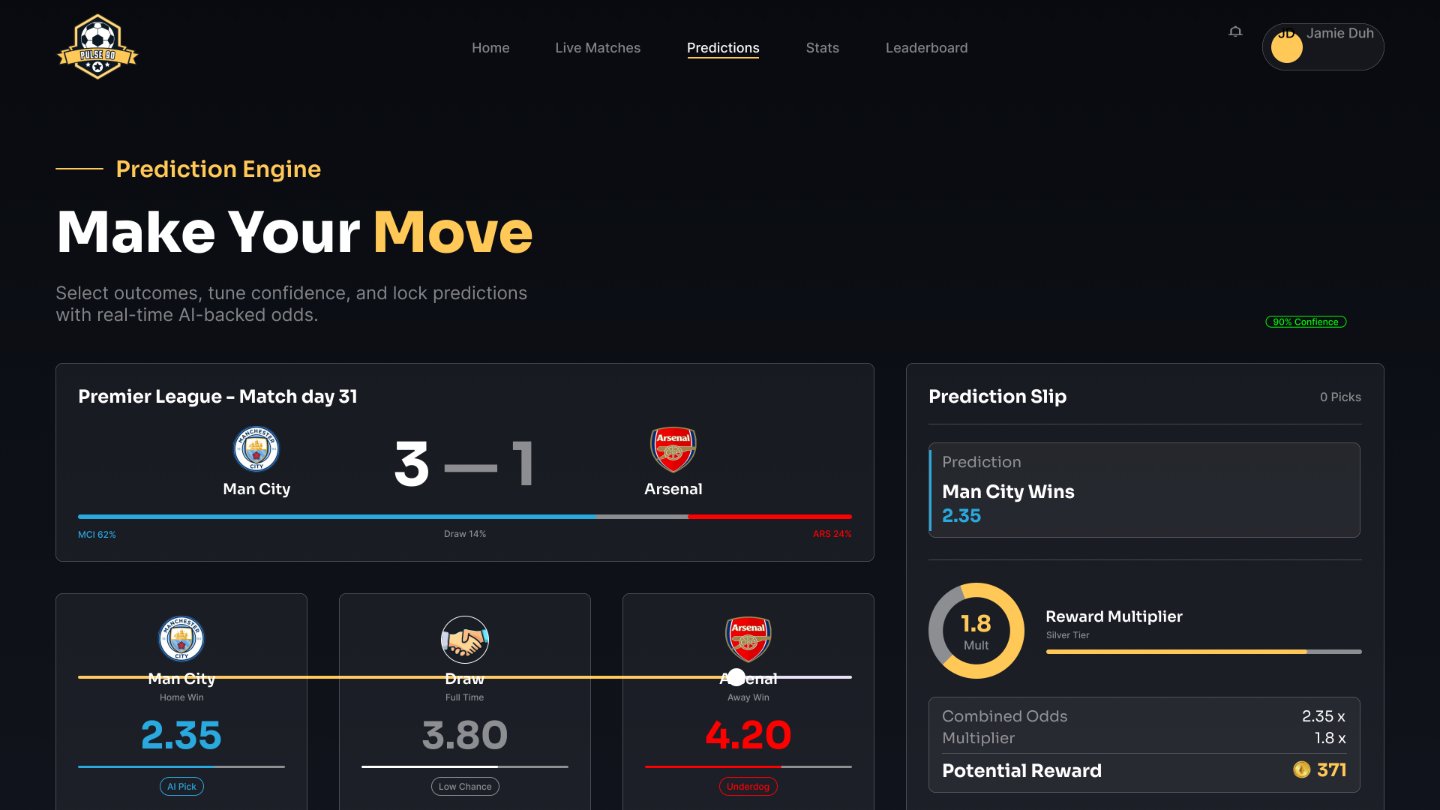
The Pulse 90 product experience was designed as a connected multi-page ecosystem focused on live football engagement. The platform combines live match dashboards, prediction systems, telemetry-inspired analytics, leaderboard environments, and community interaction layers within one scalable interface system.
Each product area was intentionally separated into focused experiences while remaining connected through one cohesive design system. The interface prioritised rapid information scanning, live-state responsiveness, immersive interaction, modular scalability, and visual clarity during high-intensity moments.
Live match dashboard
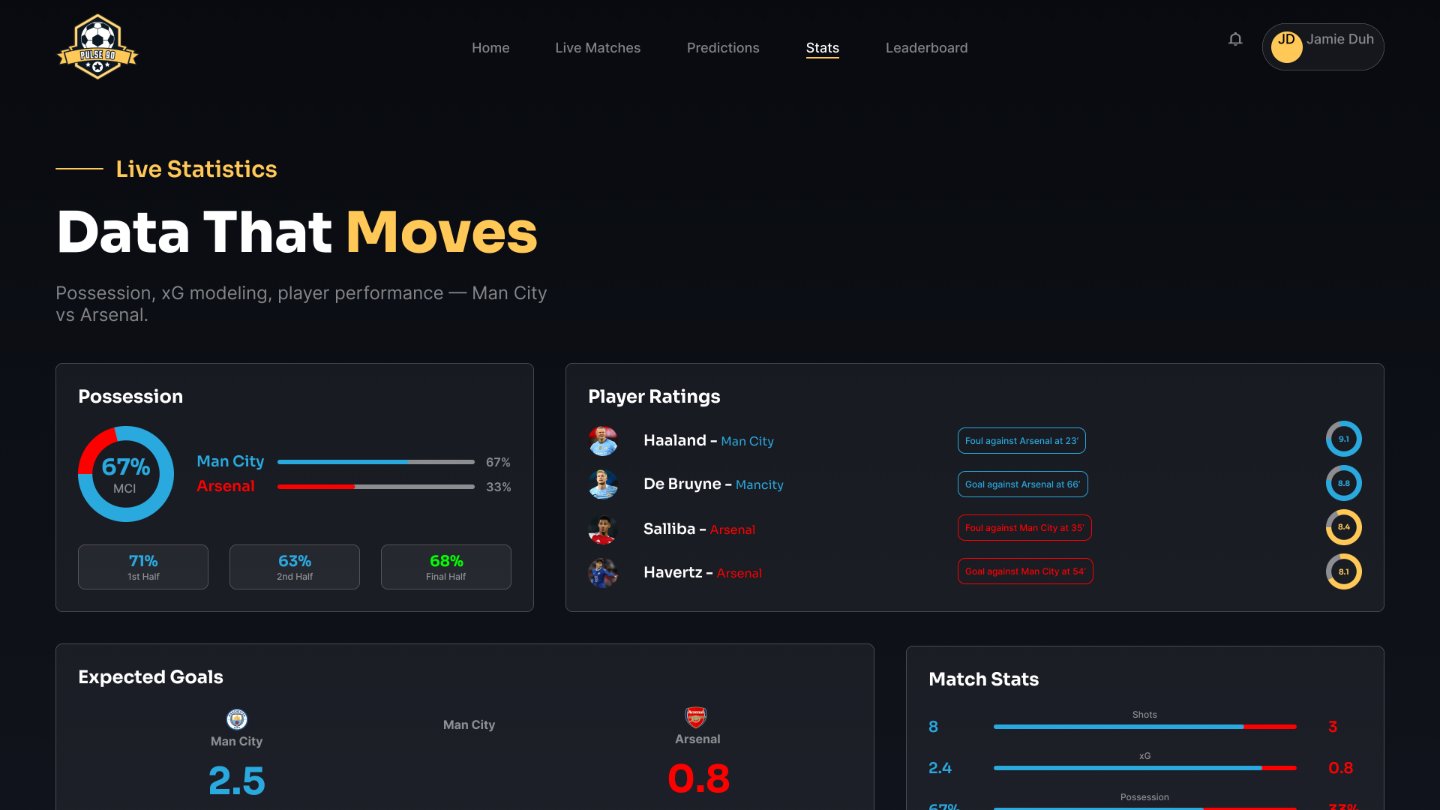
The live dashboard became one of the core interaction layers within the Pulse 90 ecosystem. The experience was designed to simulate the atmosphere of watching a live football broadcast while interacting with predictive match intelligence in real time. It combines live score tracking, momentum analytics, possession statistics, telemetry-inspired visualisations, match switching systems, and activity feeds within one cohesive environment.
Reusable momentum-driven graph components that communicate match energy and pressure shifts in real time with smooth, broadcast-style transitions.
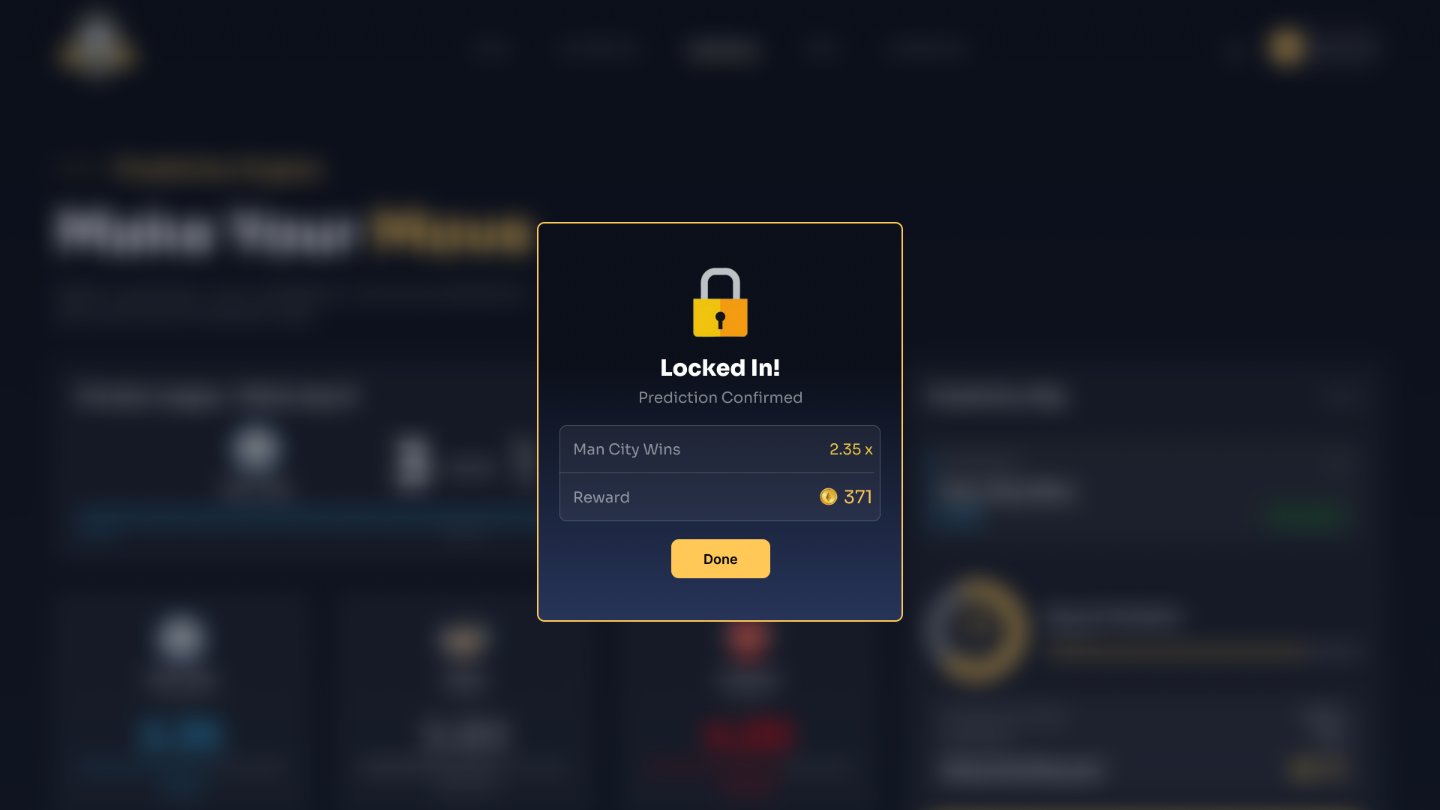
Focused interaction zones designed for rapid prediction input during high-pressure live moments, with confirmation feedback and animated live states.
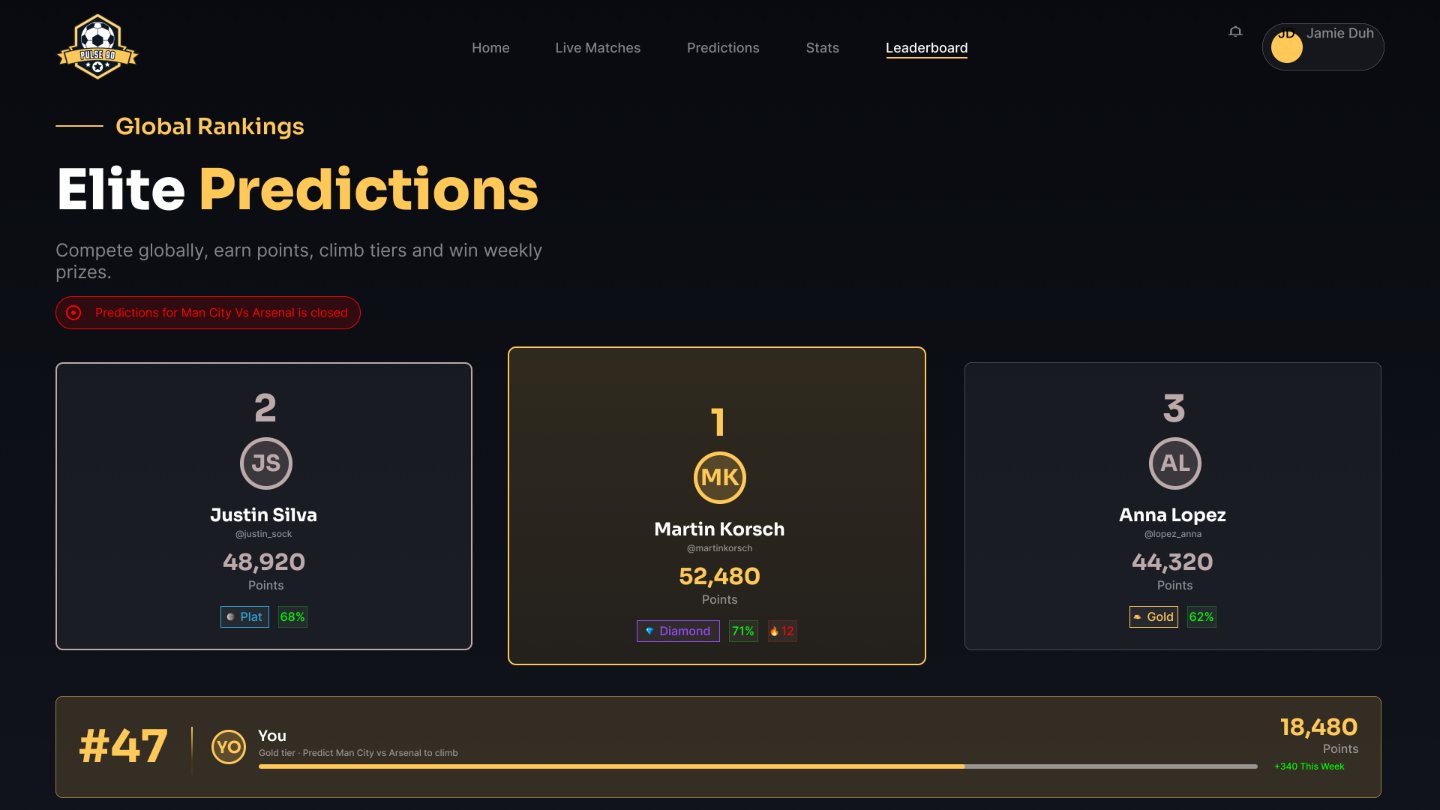
Ranking components and social layers that reinforce the competitive, community-driven nature of the platform across sessions and matchdays.
Motion as a functional communication layer
Motion was treated as a functional layer of communication rather than decorative animation. The interaction system was designed to reinforce live intensity, responsiveness, emotional engagement, active gameplay feedback, and state awareness through subtle but meaningful motion behaviours.
The interaction rhythm was intentionally designed to feel fast, responsive, premium, and smooth — similar to modern sports broadcast systems and high-performance digital products.
The objective was to create an experience that feels reactive and immersive while ensuring motion never interrupts readability or usability.
Preserving the immersive atmosphere across all screen sizes
A modular component architecture was developed to ensure consistency across live dashboards, prediction interfaces, leaderboard modules, analytics systems, and responsive layouts. Reusable systems included live match cards, telemetry widgets, prediction modules, ranking components, navigation systems, and analytics visualisations.
The responsive system was designed to preserve the immersive football atmosphere across multiple screen sizes while maintaining clarity during high-intensity live interactions. Rather than simply resizing layouts, the responsive experience focused on restructuring interaction priorities based on viewing context and user behaviour.
The whole ecosystem, on one page
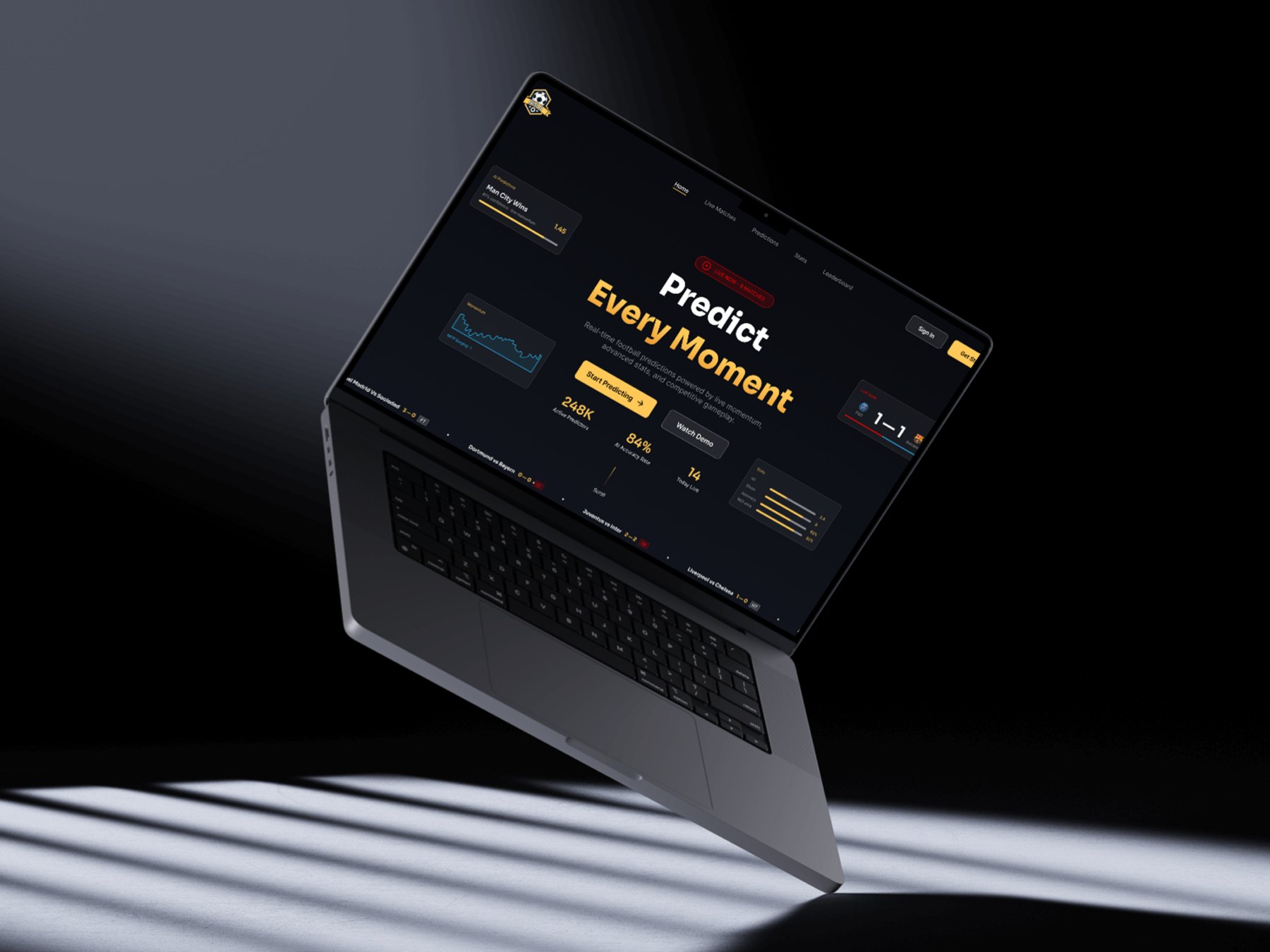
The single-page landing experience carries the identity end to end — a cinematic hero into live match intelligence, prediction interaction, telemetry analytics, and community ranking, closing on the call to join. Scroll is the narrative device: each band hands off to the next with the same live-state language the product uses.
Seven website screens