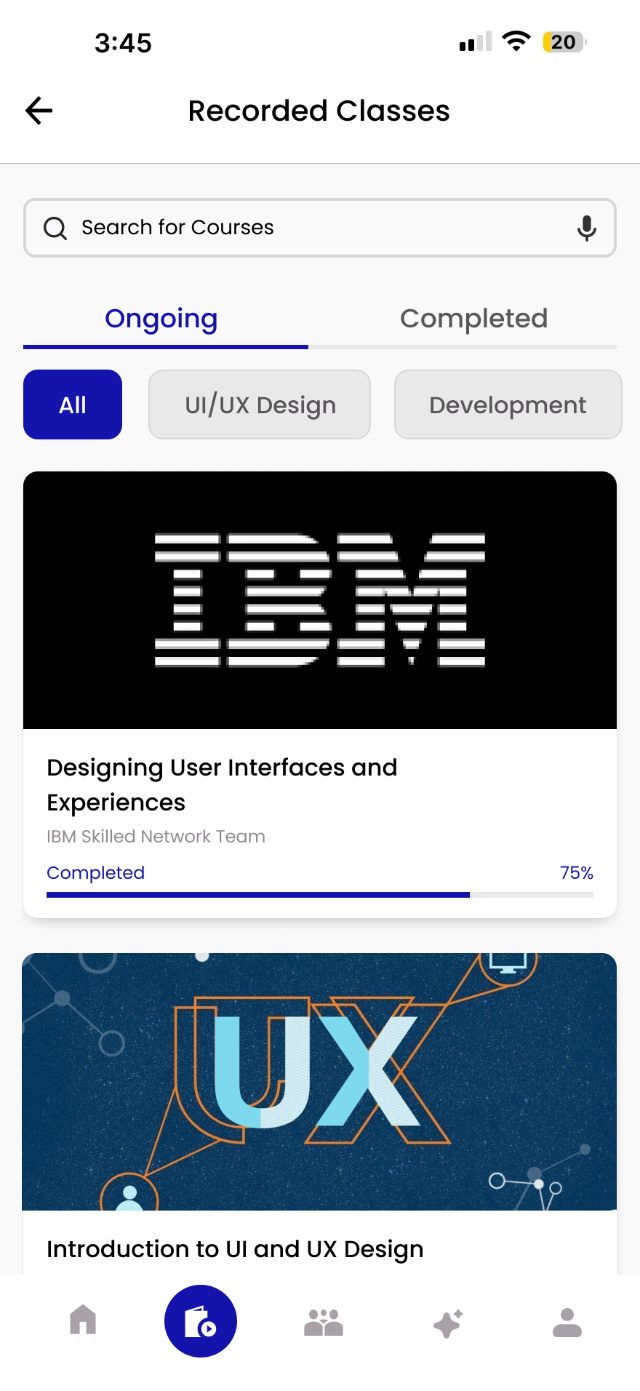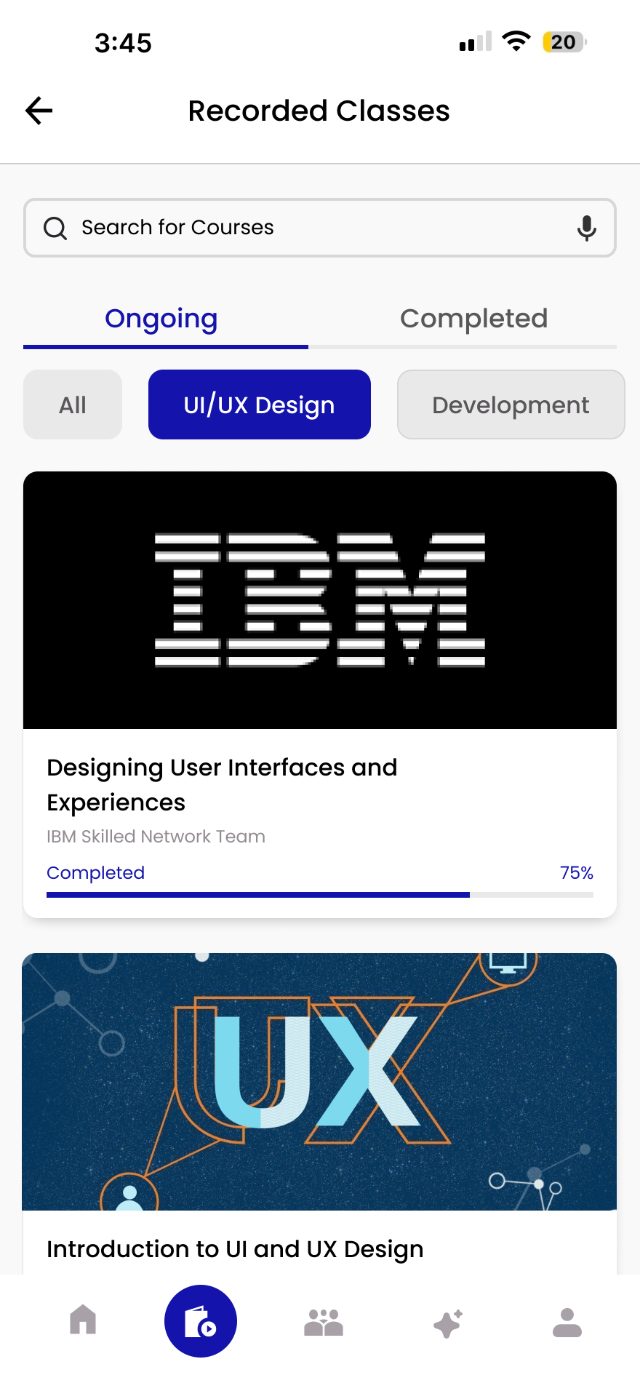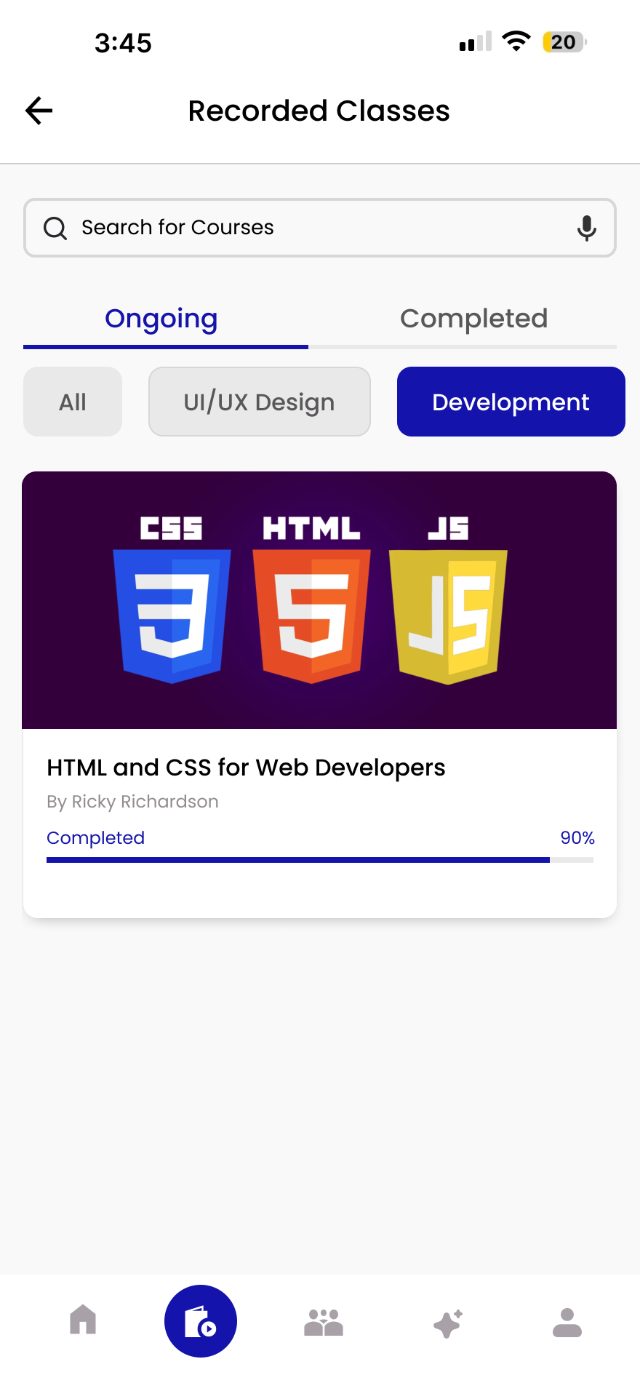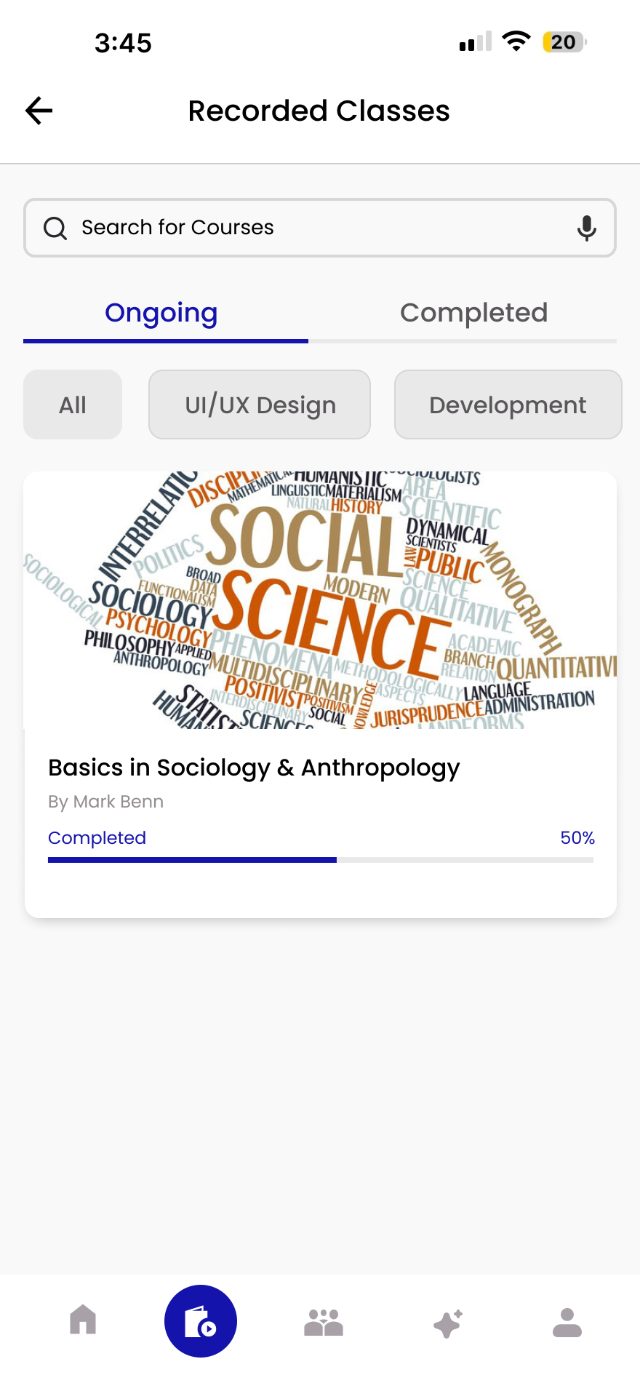
Learners enrol with interest, then quietly drop off
Online education increases accessibility, but it frequently lacks engagement. Due to insufficient interaction, a lack of peer support and unclear guidance, many students enrol with interest but eventually lose interest. Users are also confused about which skills match their career goals and feel overloaded with course options. Unresolved doubts cause frustration and course abandonment in the absence of mentorship or guidance.
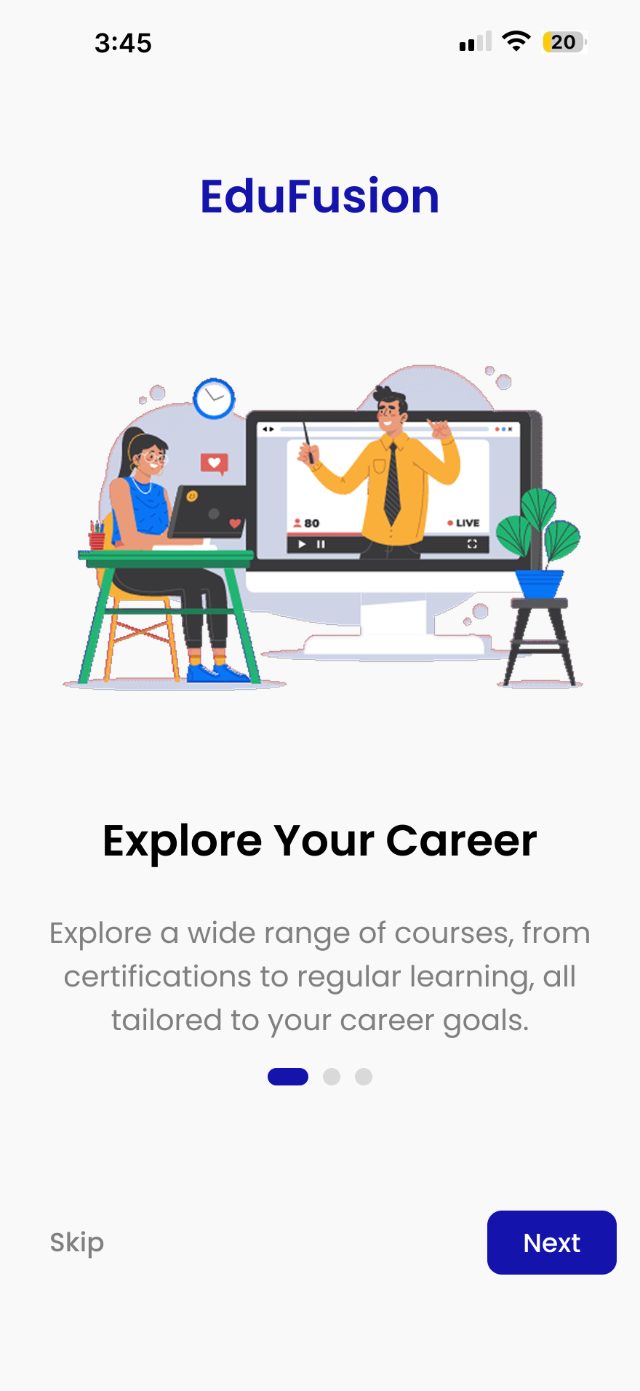
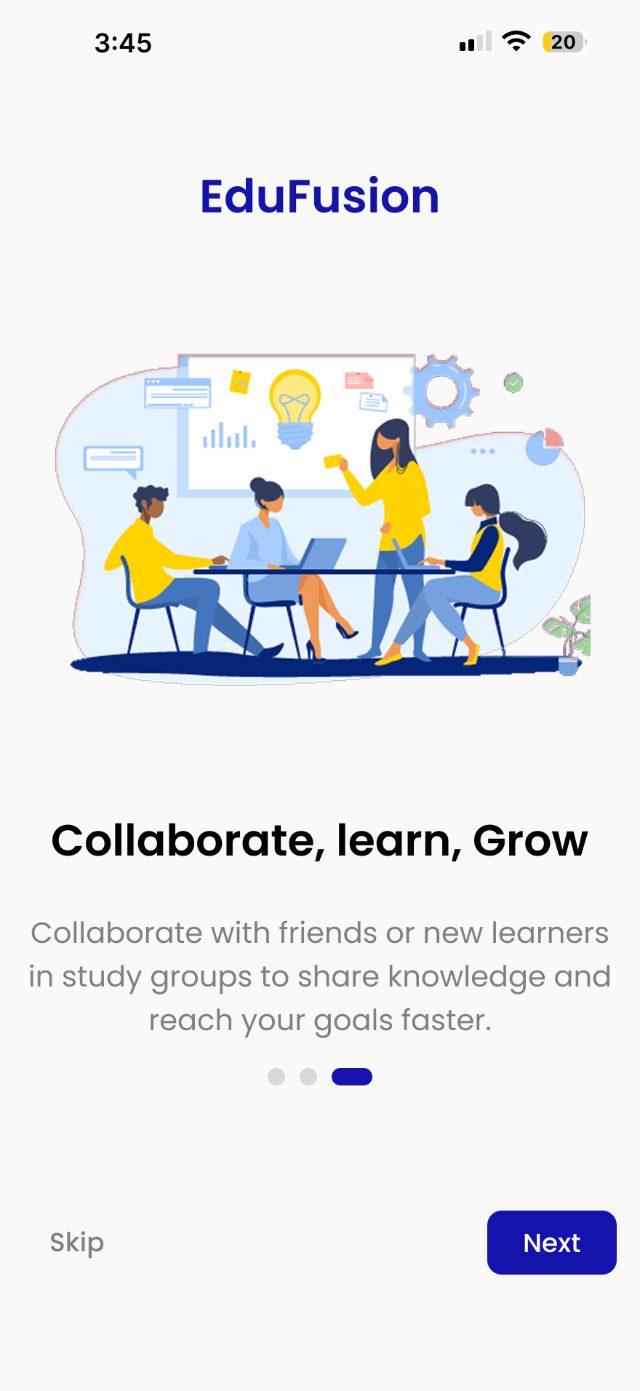
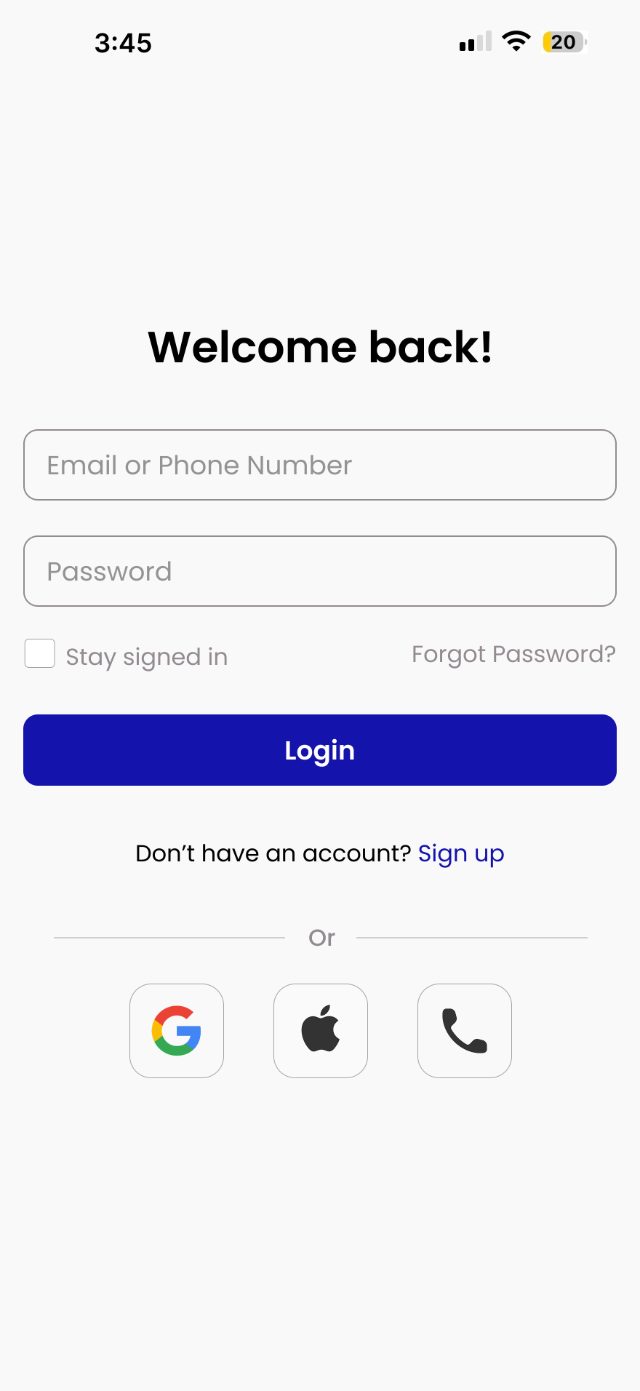
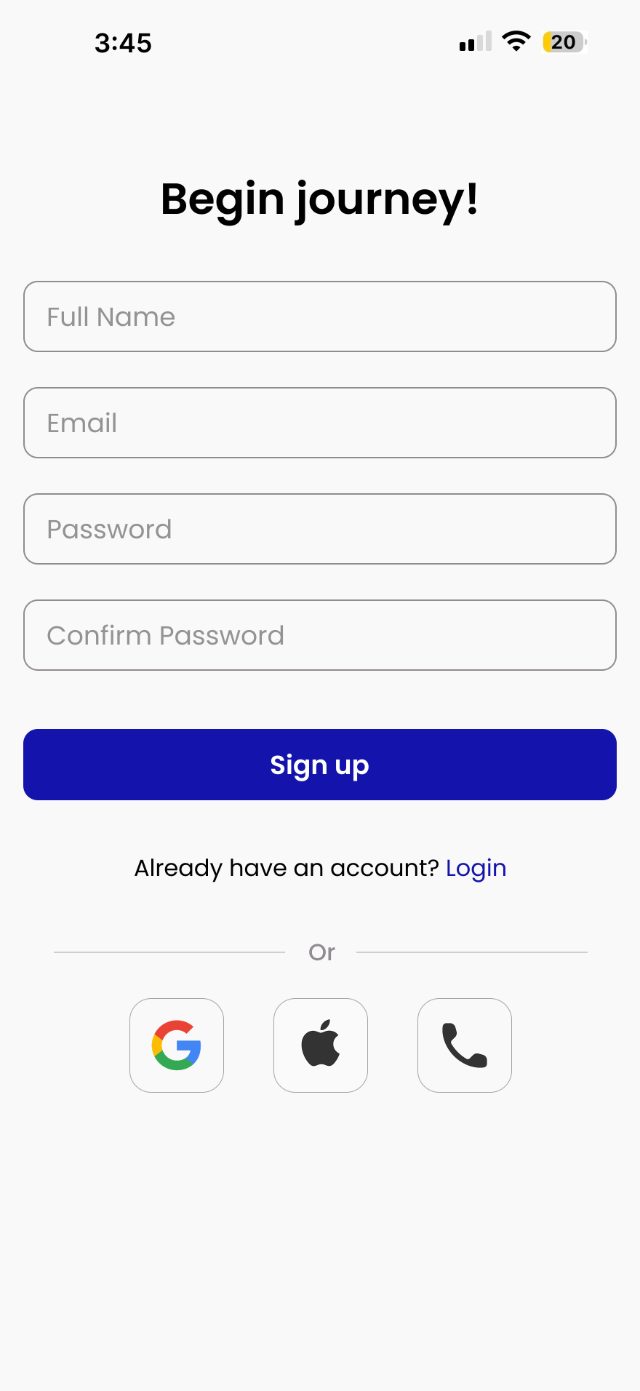
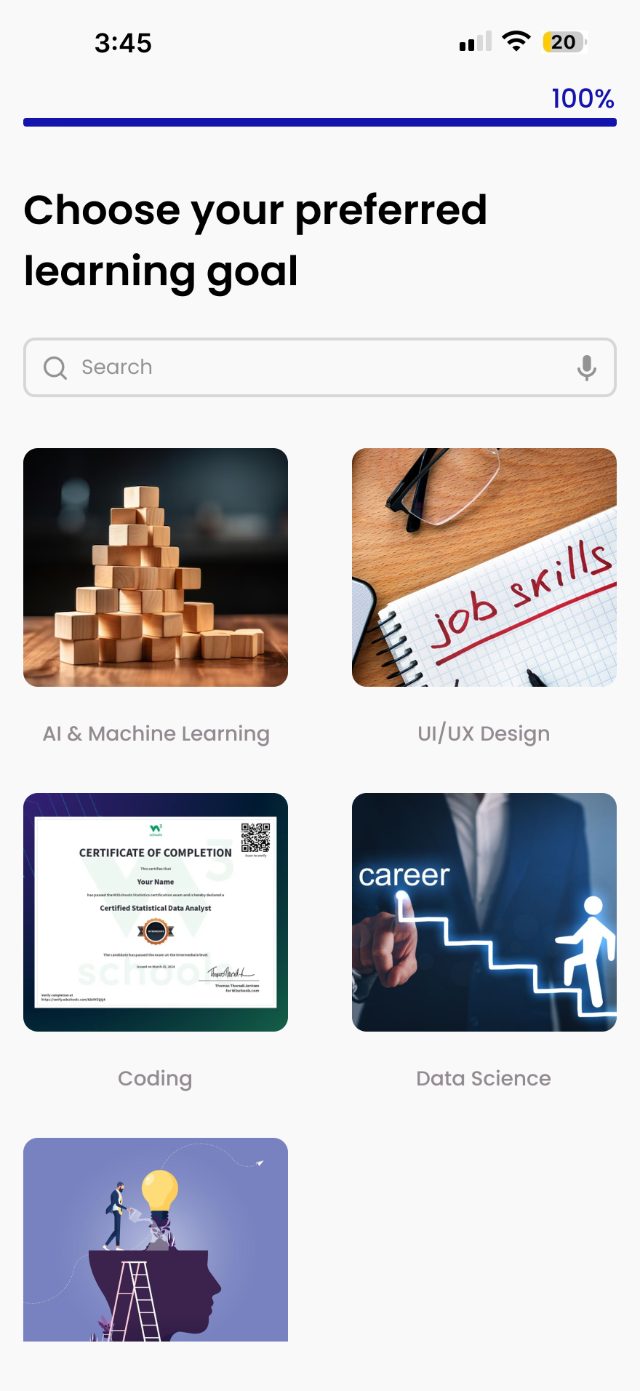
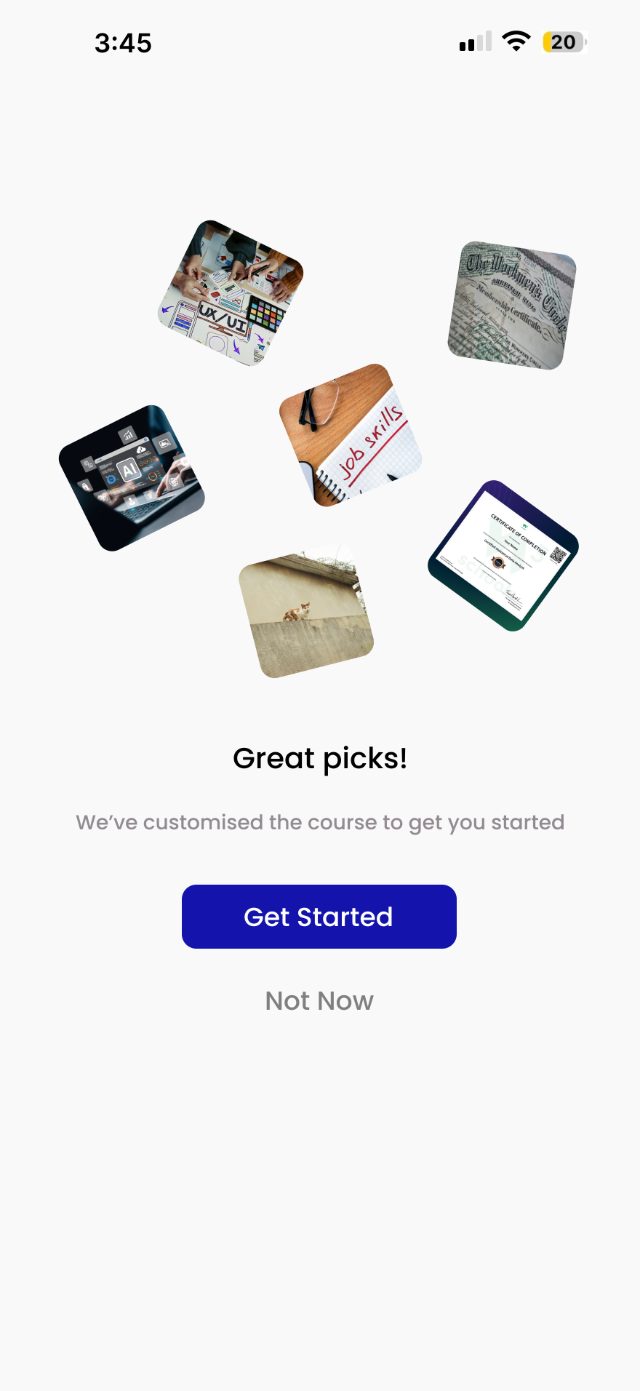
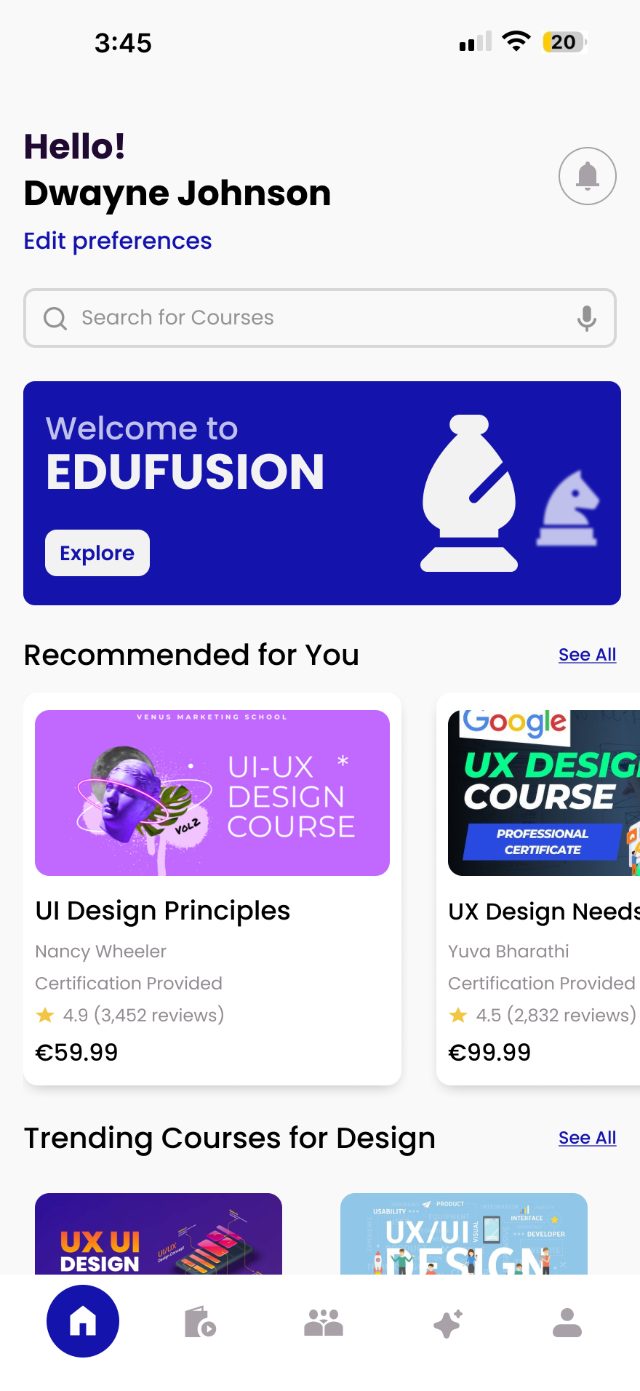
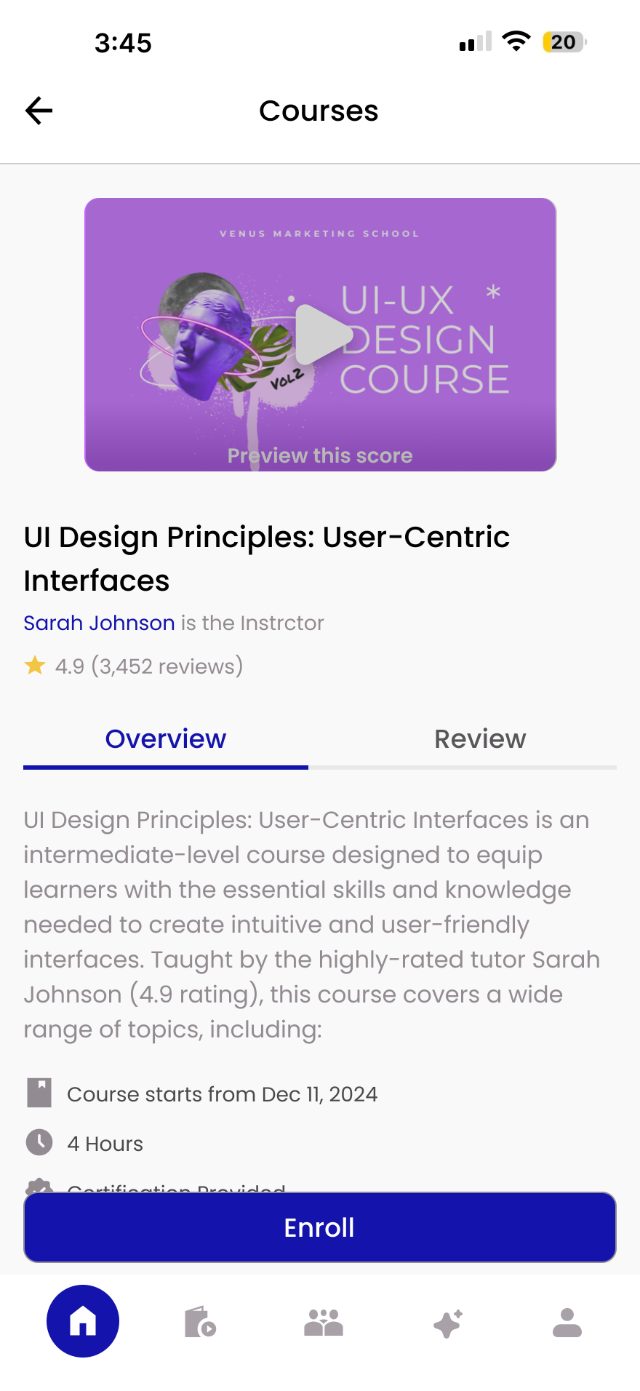
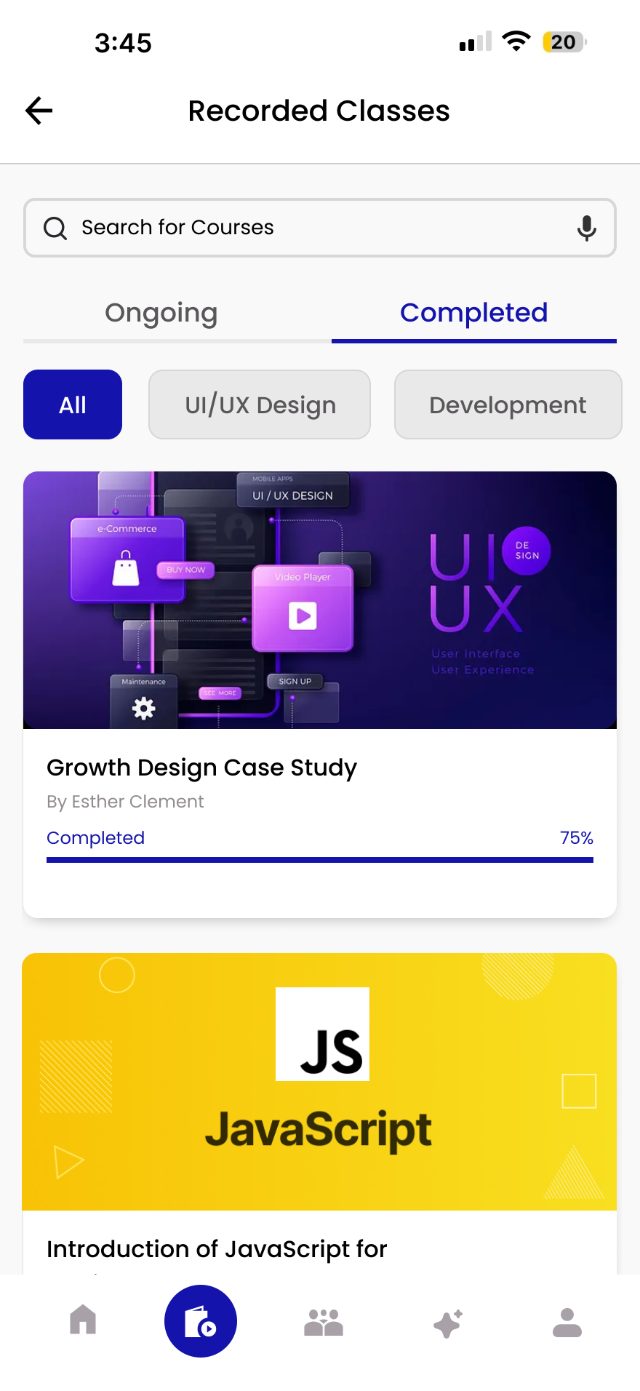
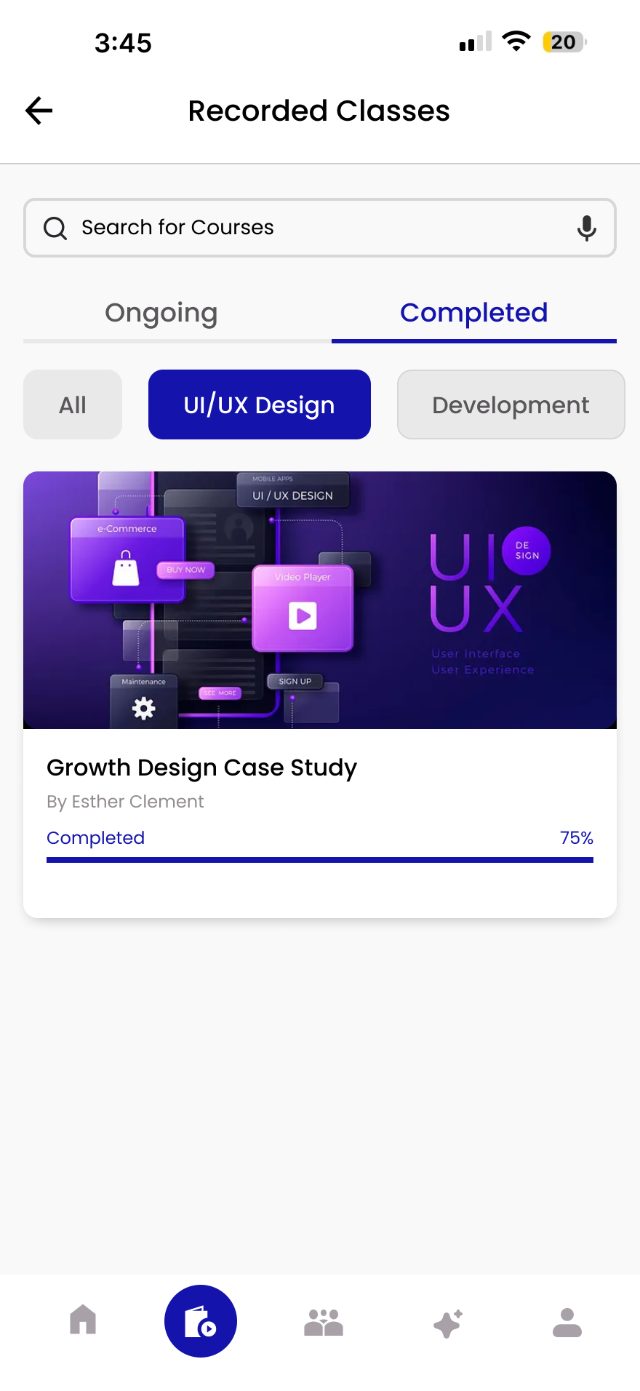
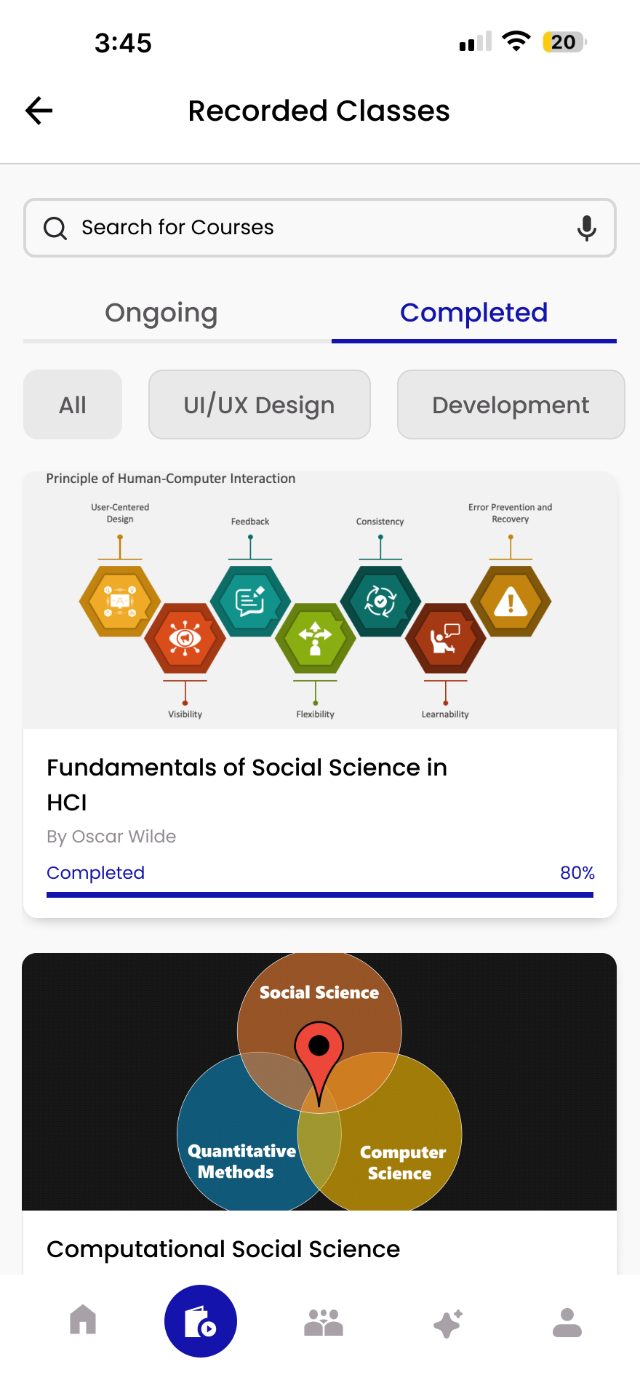
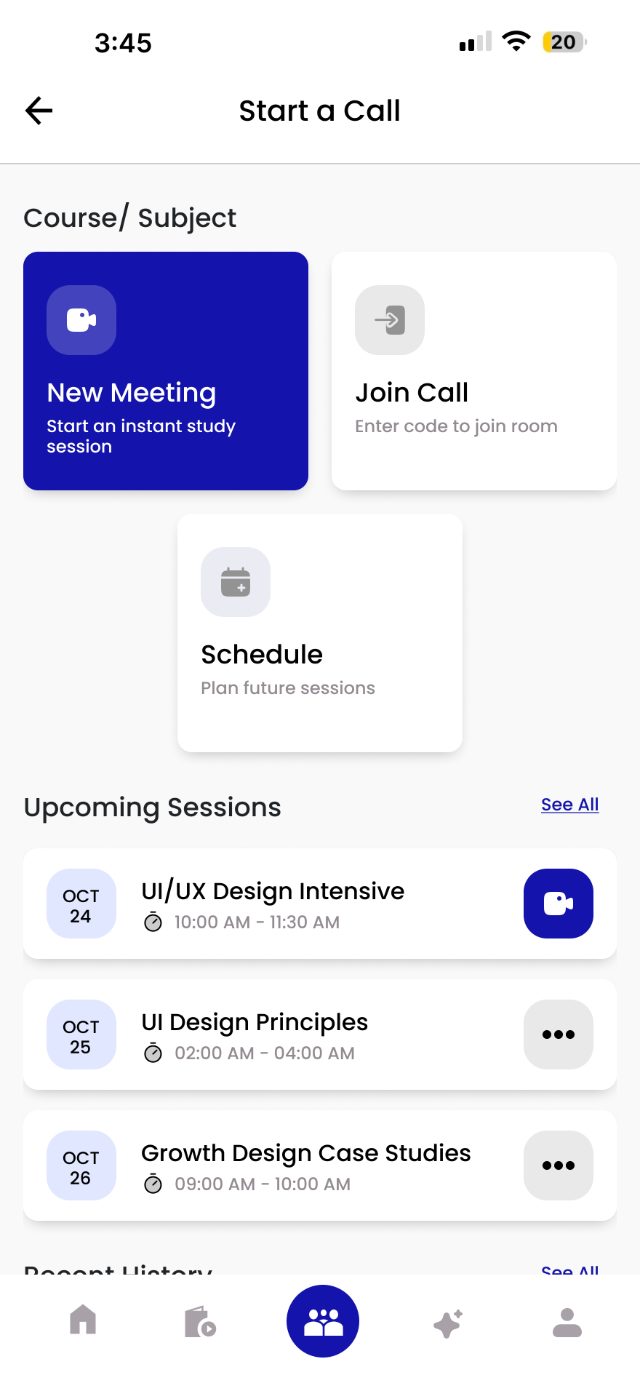
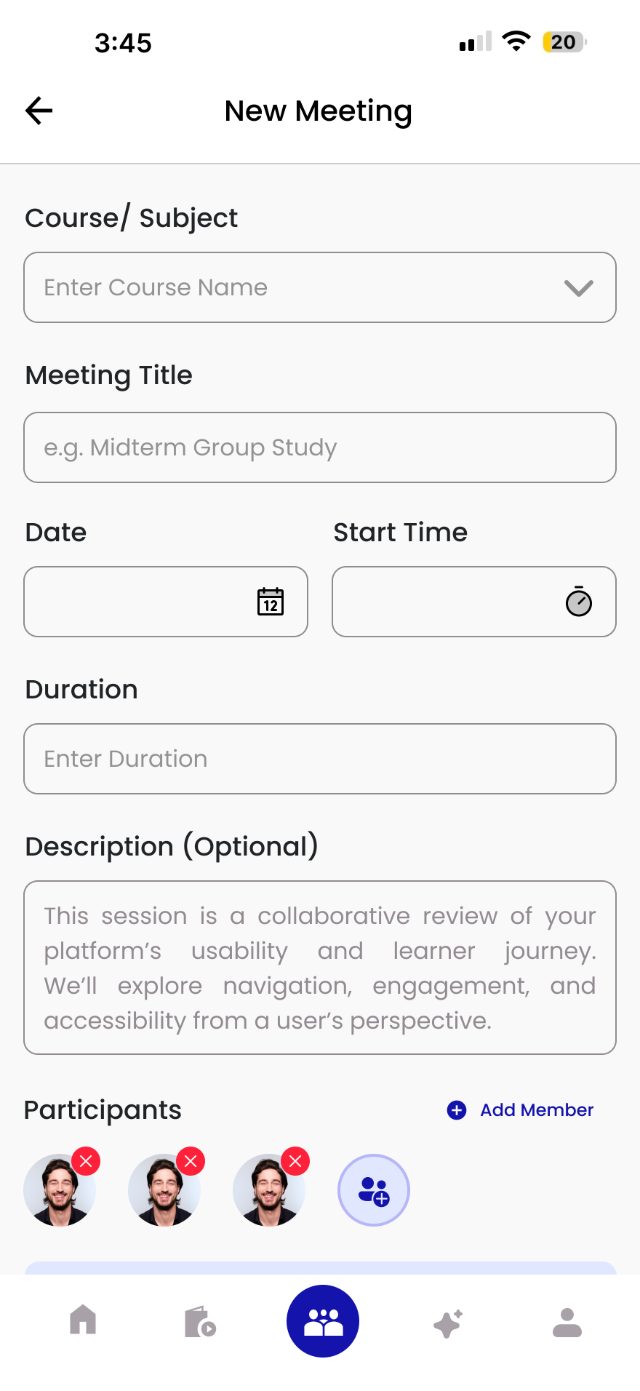
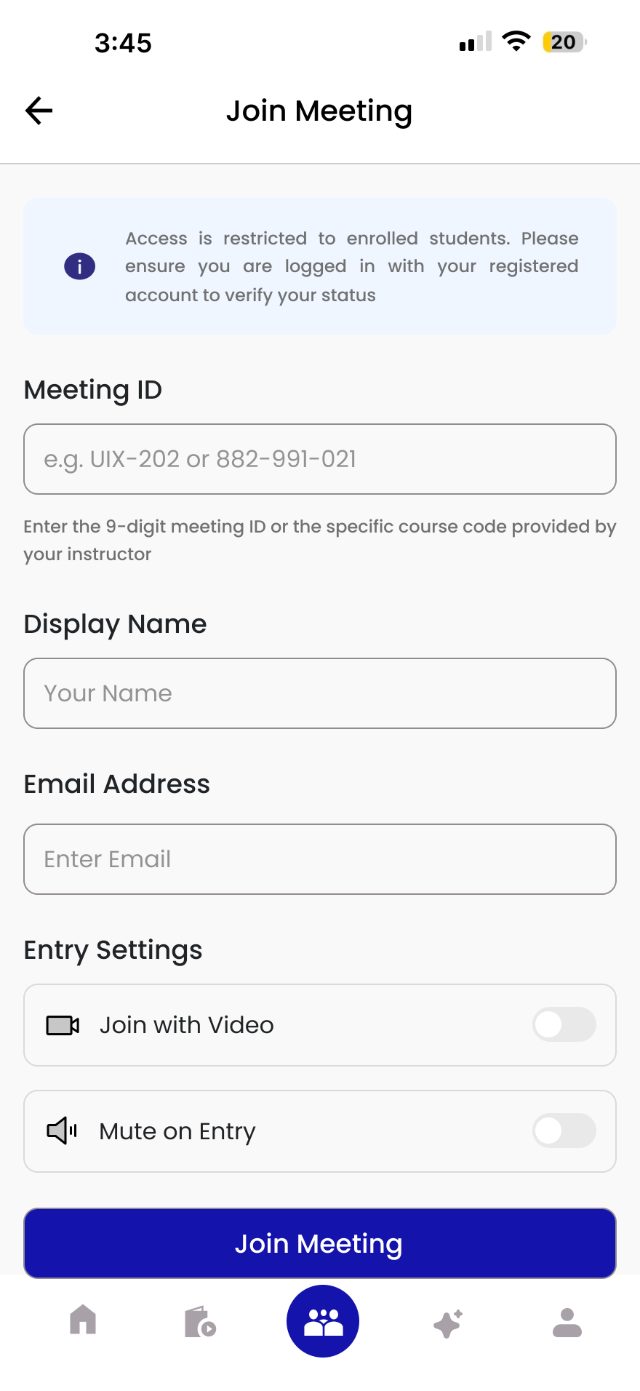
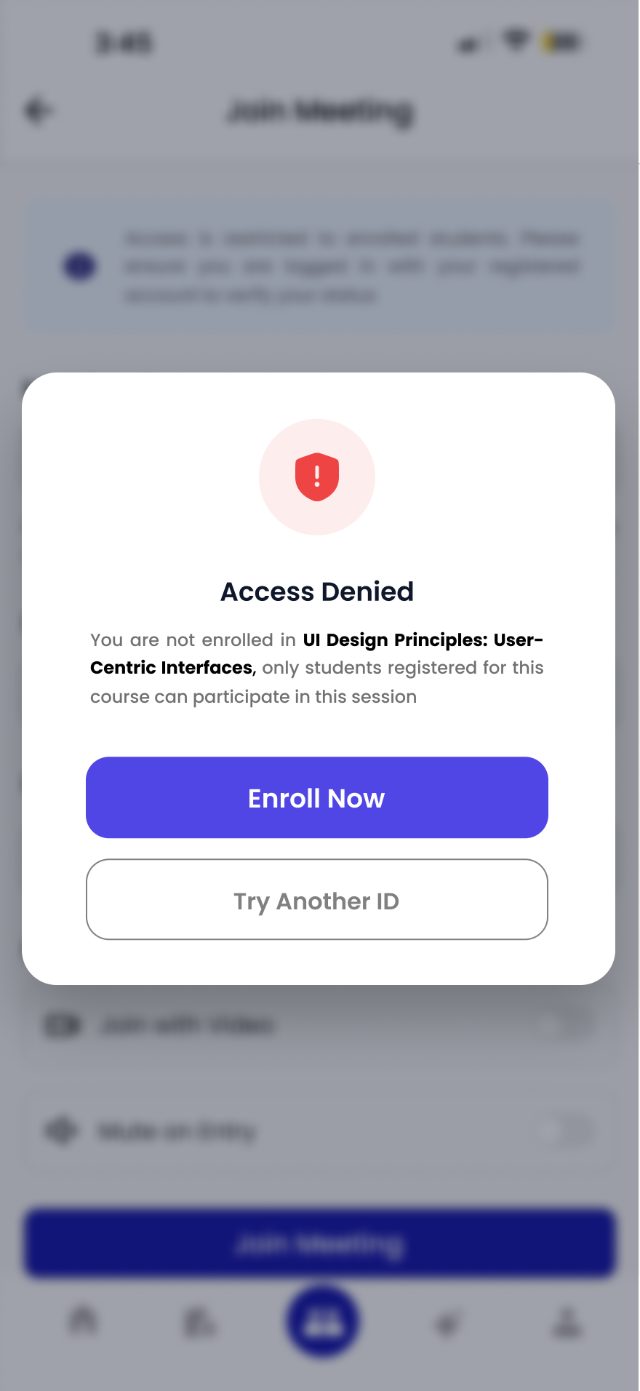
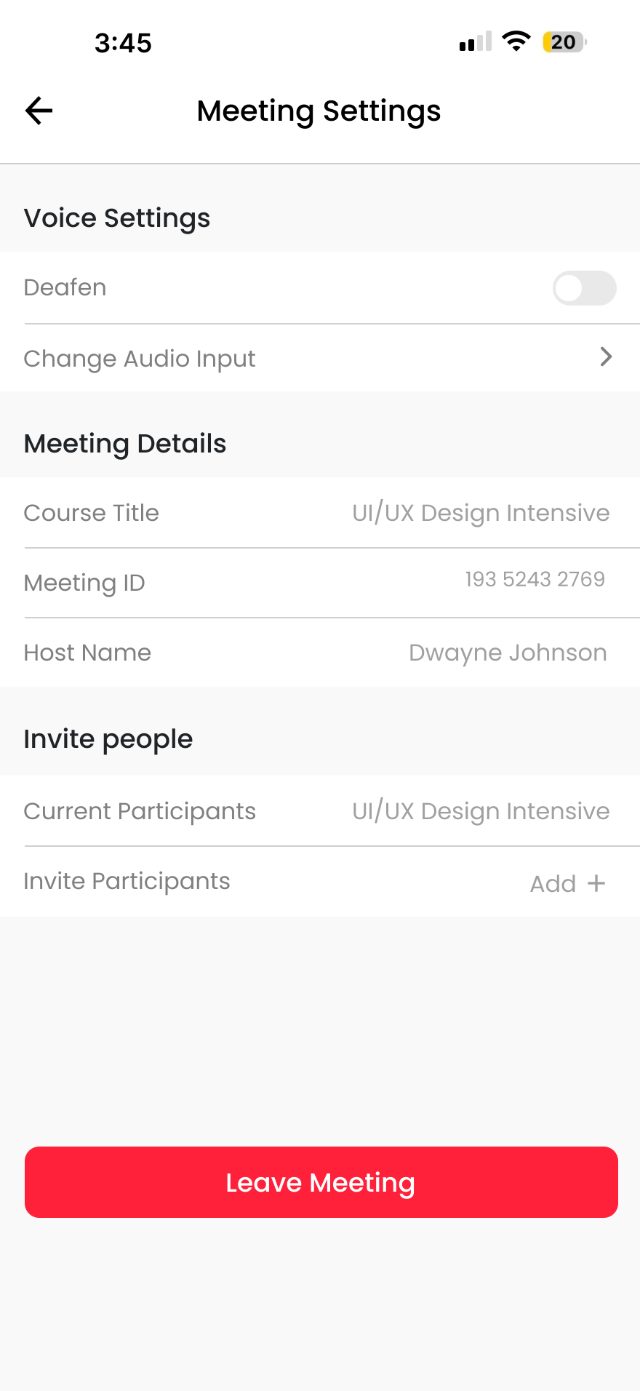
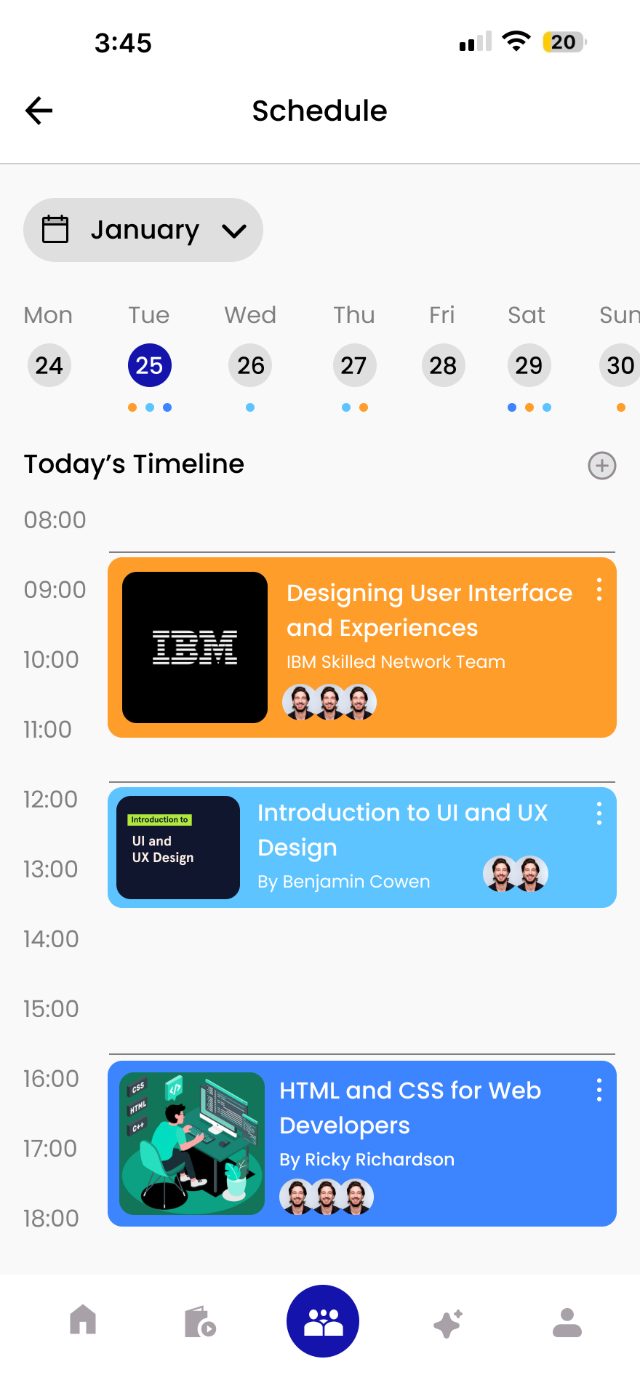
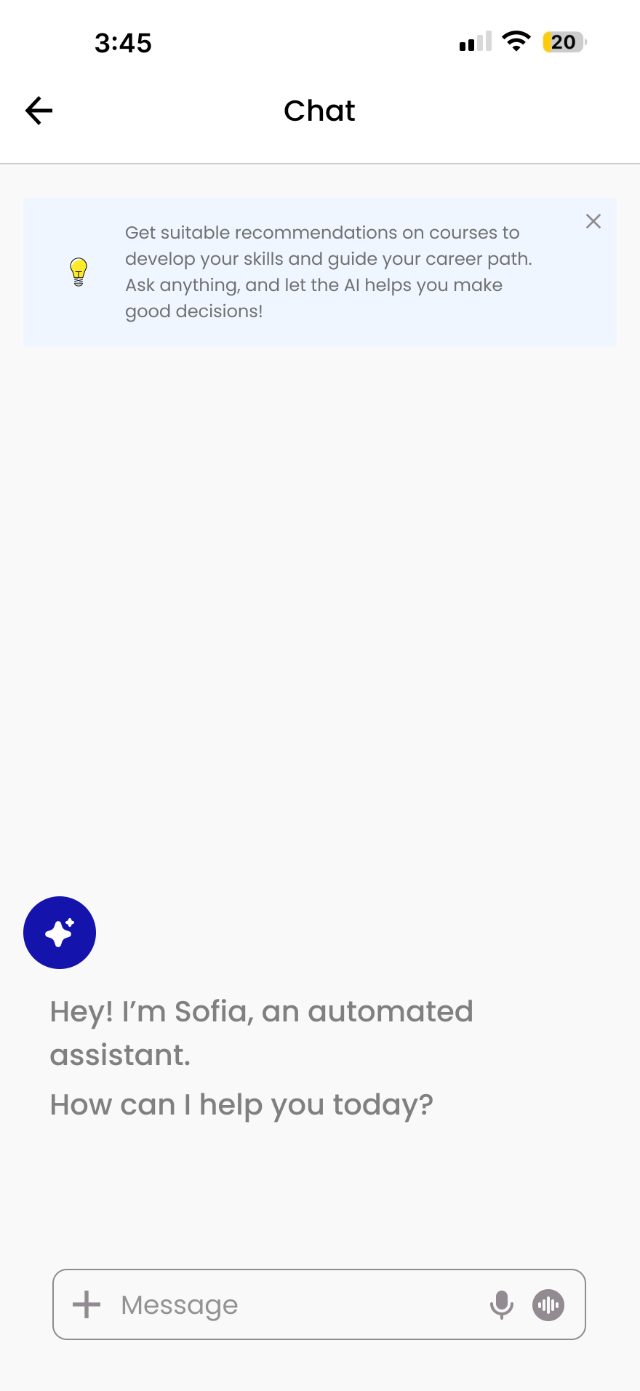
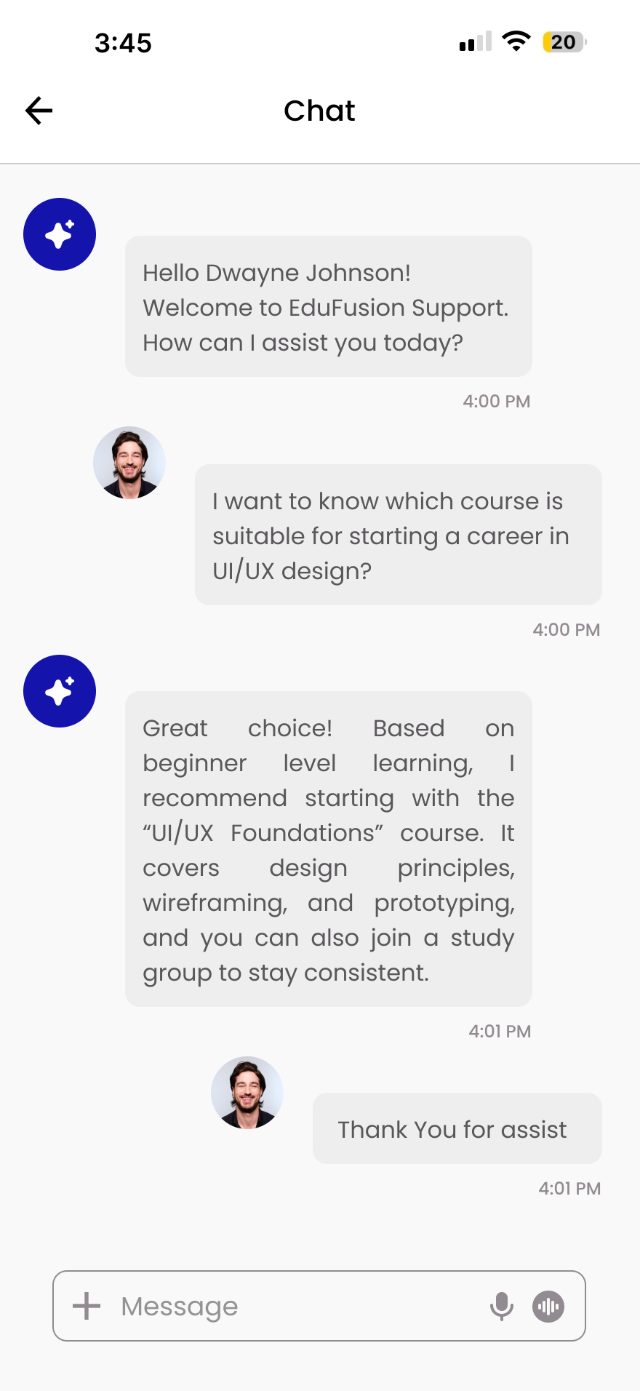
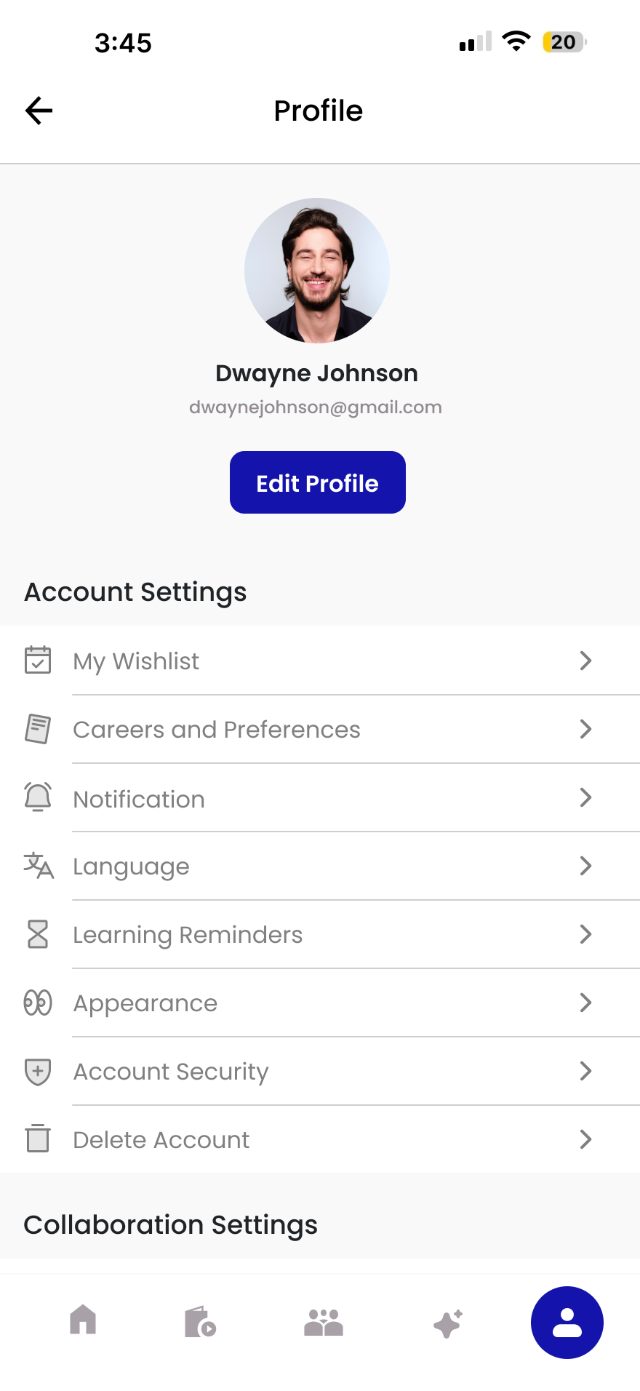
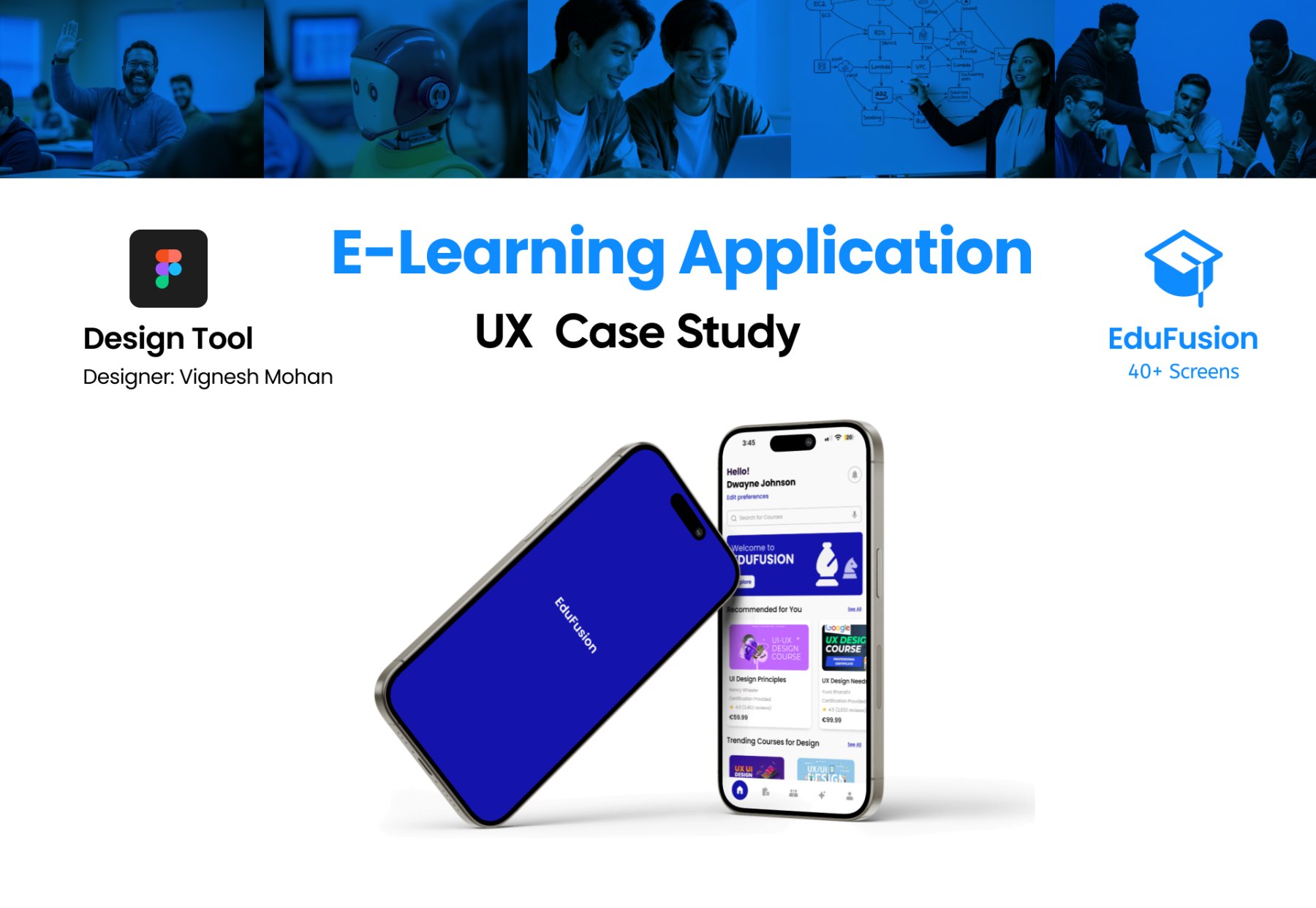
EduFusion is a mobile collaborative e-learning platform designed to improve engagement and course completion. The platform combines structured courses, peer study groups and an AI learning assistant to support learners throughout their learning journey. By allowing users to study with friends, schedule sessions and receive guidance, the product turns online learning into a more interactive and supportive experience.
The platform targets students and early-career learners who rely on smartphones for skill development. Although they appreciate adaptability, many of them have trouble staying on course and consistent. The product encourages interaction and accountability by combining collaborative features with self-paced learning. A sleek, contemporary interface helps users focus and minimise distractions.
University students and young graduates who take online courses but face difficulties in being consistent and motivated.
Young professionals and career switchers who need to skill up.
Self-learners and hobbyists who learn at their own pace for their own growth.
User research explored learners' behaviours, needs and motivations using observation, task analysis and feedback through qualitative and quantitative methods. Eighteen students and early-career learners were interviewed to understand challenges in course selection, doubt clearing and staying consistent. Insights revealed gaps in guidance, motivation and peer interaction, shaping the design of EduFusion.
Questions I asked
How do you usually plan your study?
Insight — Many learners lack structured planning and depend on self-management.
Where do you usually learn from?
Insight — Students rely heavily on scattered sources rather than one platform.
Biggest difficulty while learning online?
Insight — Motivation and accountability are the major problems.
How often do you complete online courses?
Insight — Most users start courses but fail to complete them.
What motivates you to continue learning?
Insight — Career-oriented outcomes drive engagement.
Would group learning help people?
Insight — Majority clearly prefer collaborative learning.
What feature would you like most in a learning app?
Insight — Social learning and AI support are highly desired.
How do you track your learning progress?
Insight — Many learners lack a proper progress tracking system.
One persona is a college student who struggles with focus and would benefit from reminders and discussions with peers. Another is a new graduate in search of career-enhancing skills but overwhelmed by the number of courses available. These two personas guided the decision to incorporate collaboration features and the AI guide.

"I stay motivated and consistent when I learn with friends and have clear guidance."
Mercy is a 20-year-old engineering student who uses mobile apps to enhance her knowledge in the field. She is motivated but finds that studying alone makes her less focused, and performs well in a group where she is kept accountable.

"I need a clear learning roadmap that shows what to learn and how it supports my career."
A young graduate at 24, Gbenga is looking to establish himself in the tech industry. He wants direction and advice on what to do in the field, but is overwhelmed by the number of courses available in this domain.
Instead of creating a passive content viewer, the aim was to create a supportive learning environment. The main goals were to make learning easier to continue, boost motivation and lessen isolation.
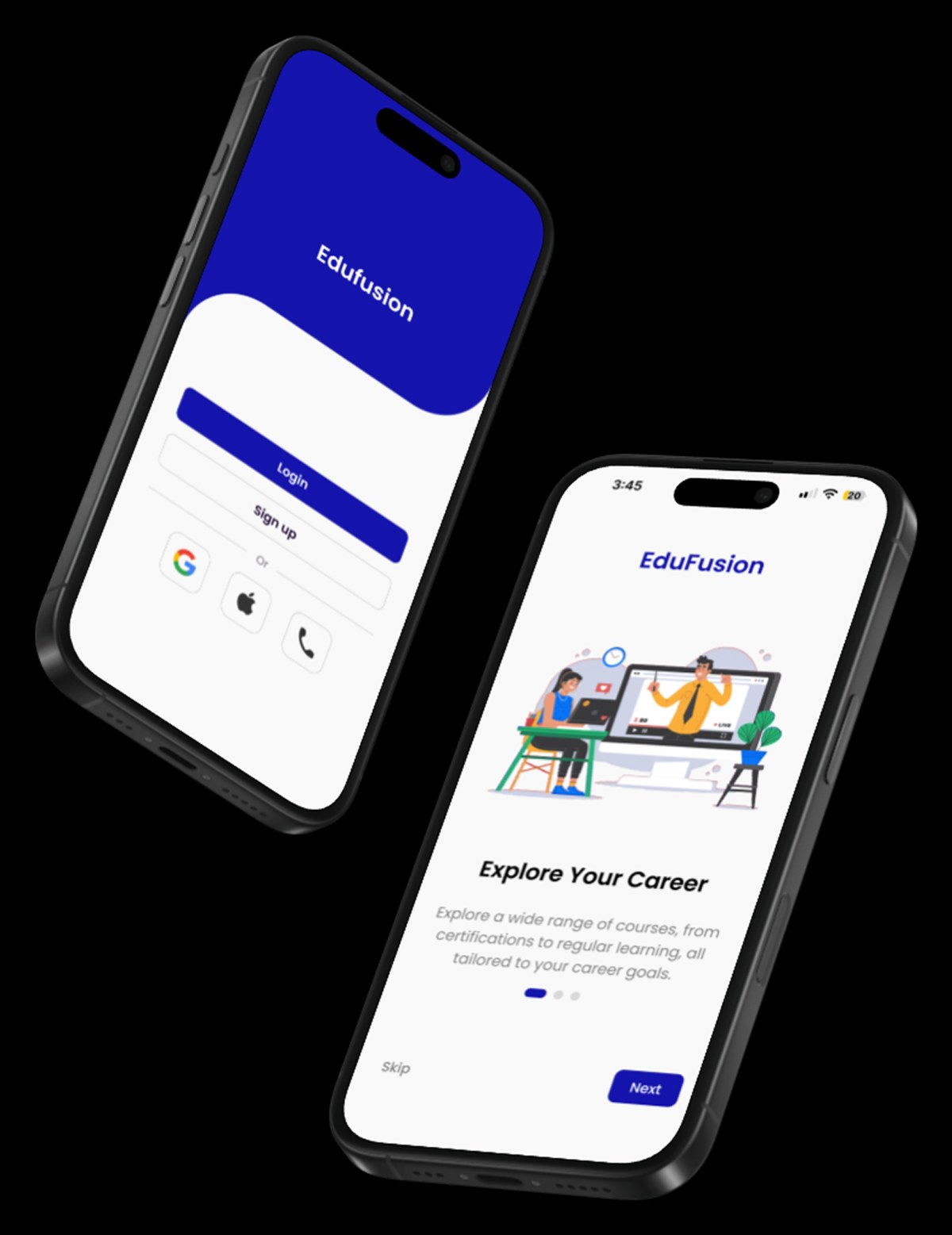
The organisation and labelling of the app's content and features so users can quickly understand, navigate and find what they need without becoming disoriented.
The step-by-step process a user goes through to complete a task — signing up for a course, joining a study group, or asking the AI assistant a question.
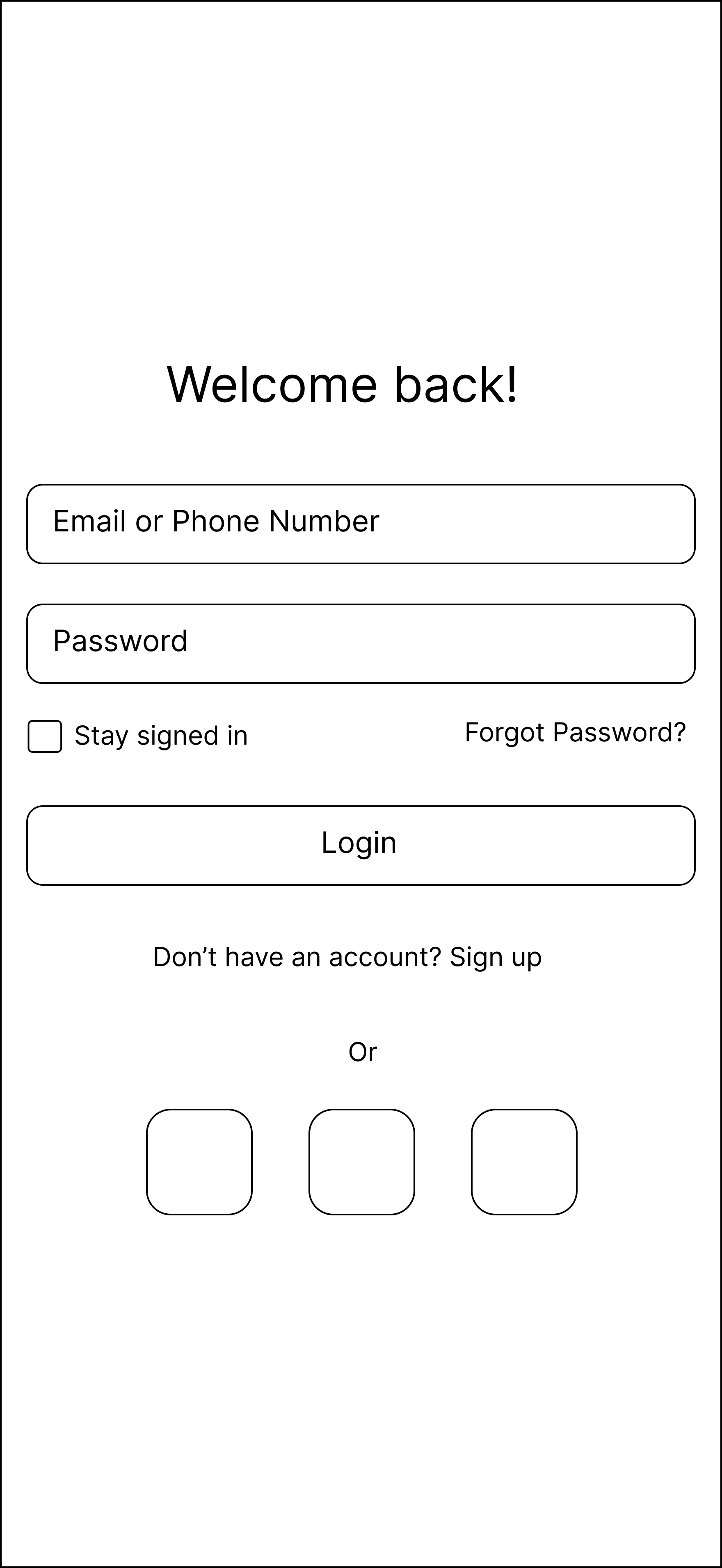
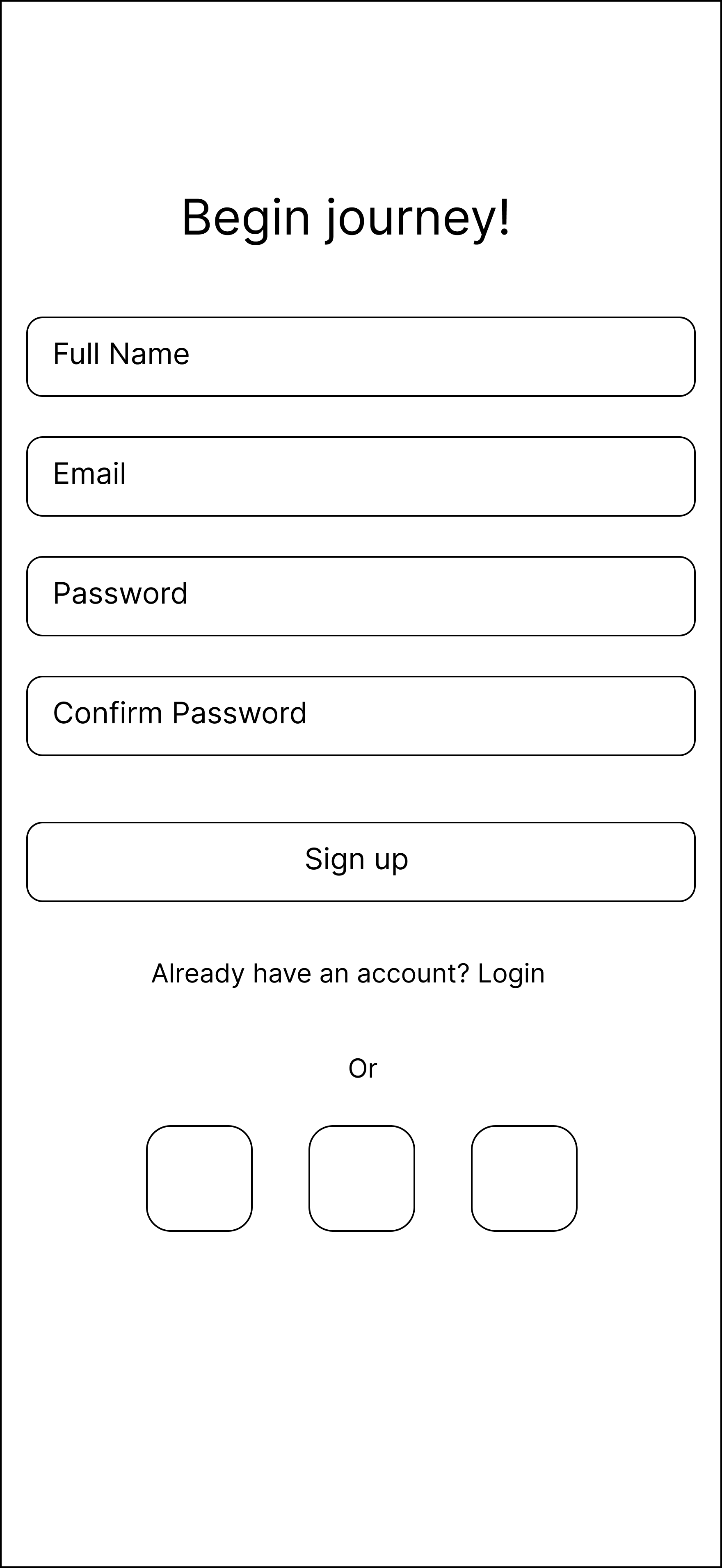
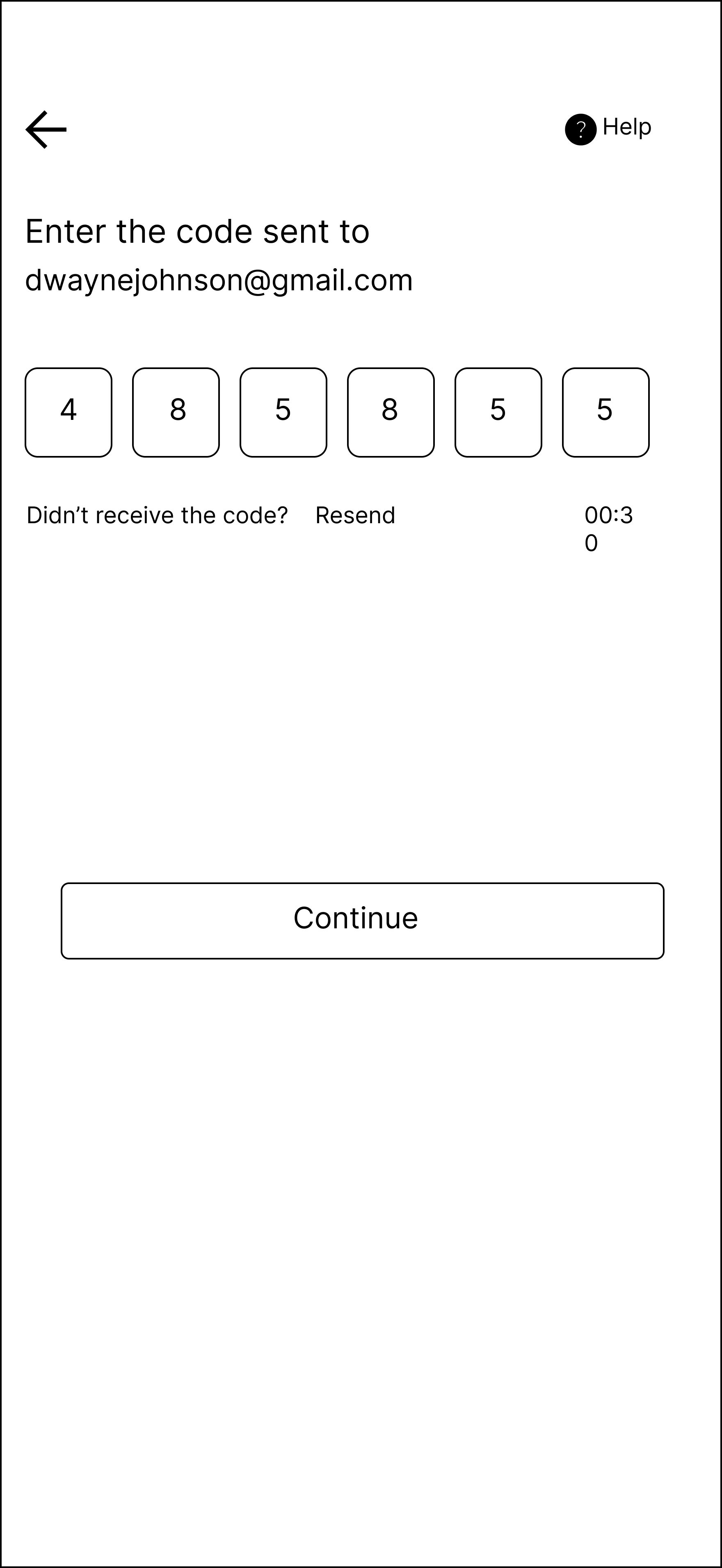
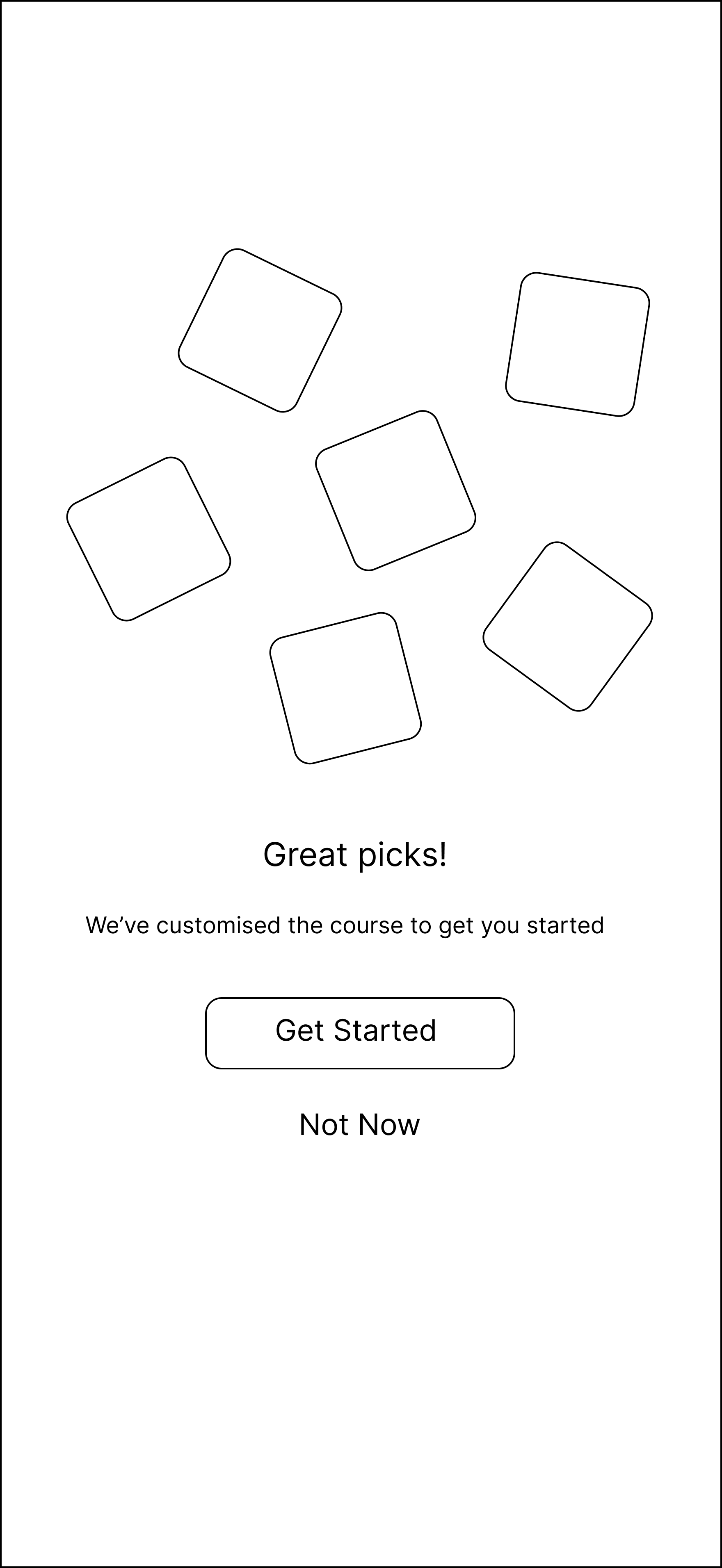
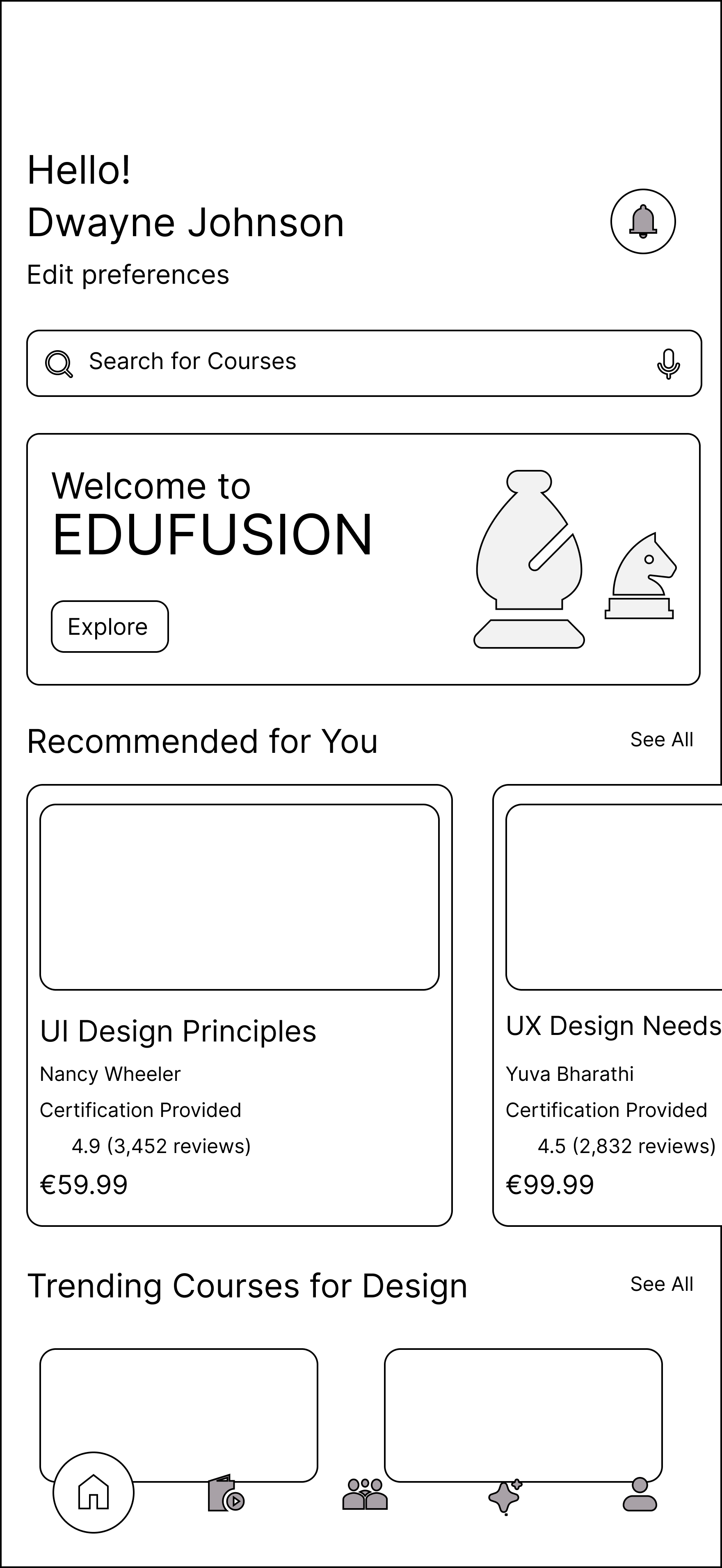
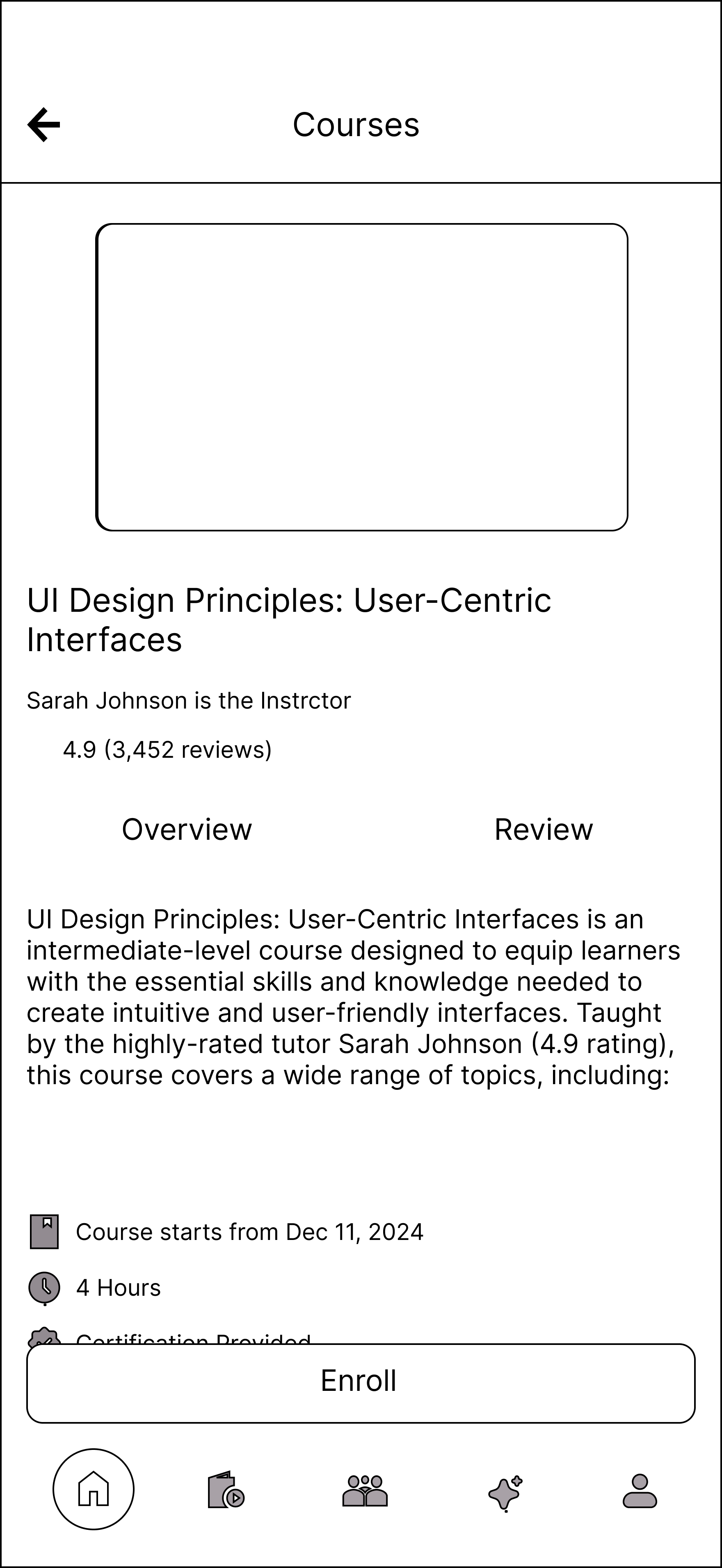
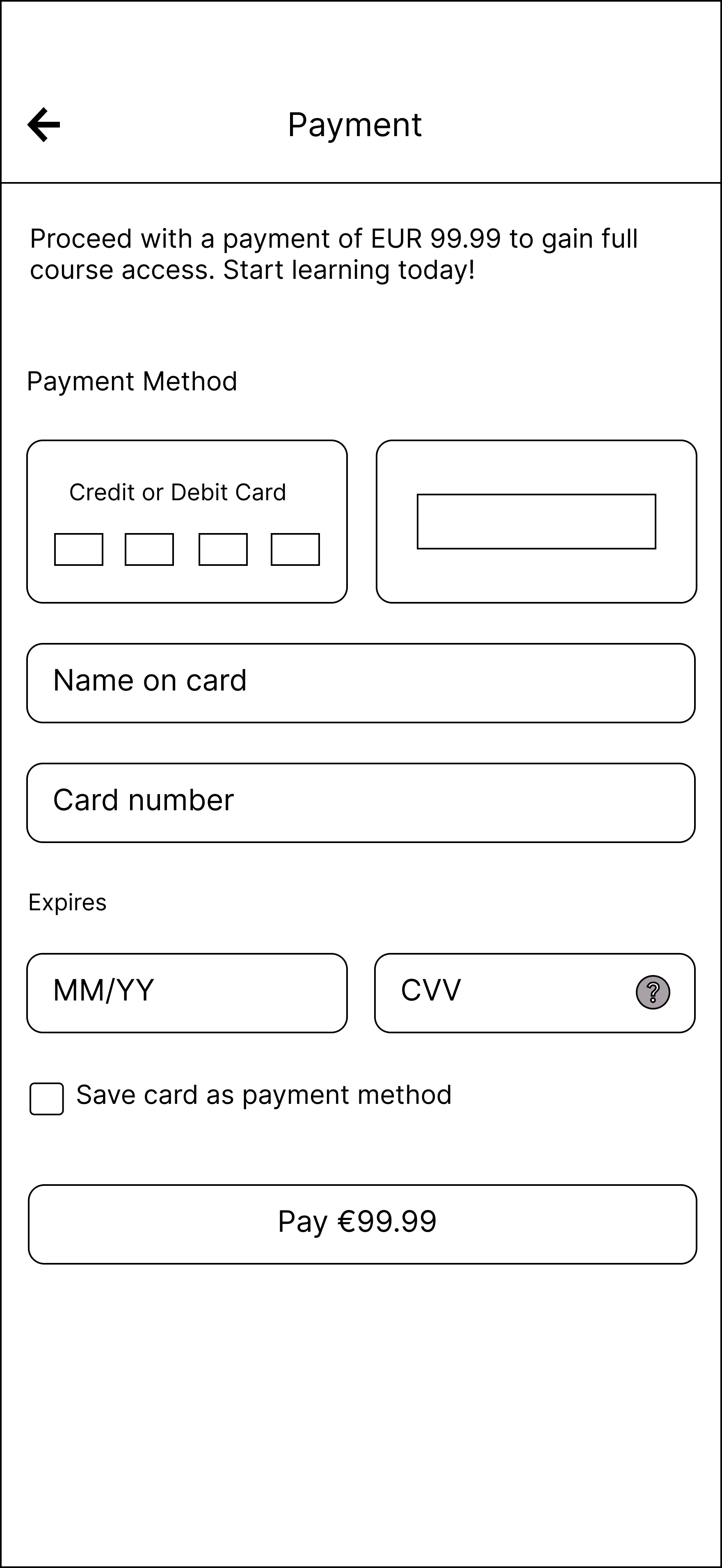
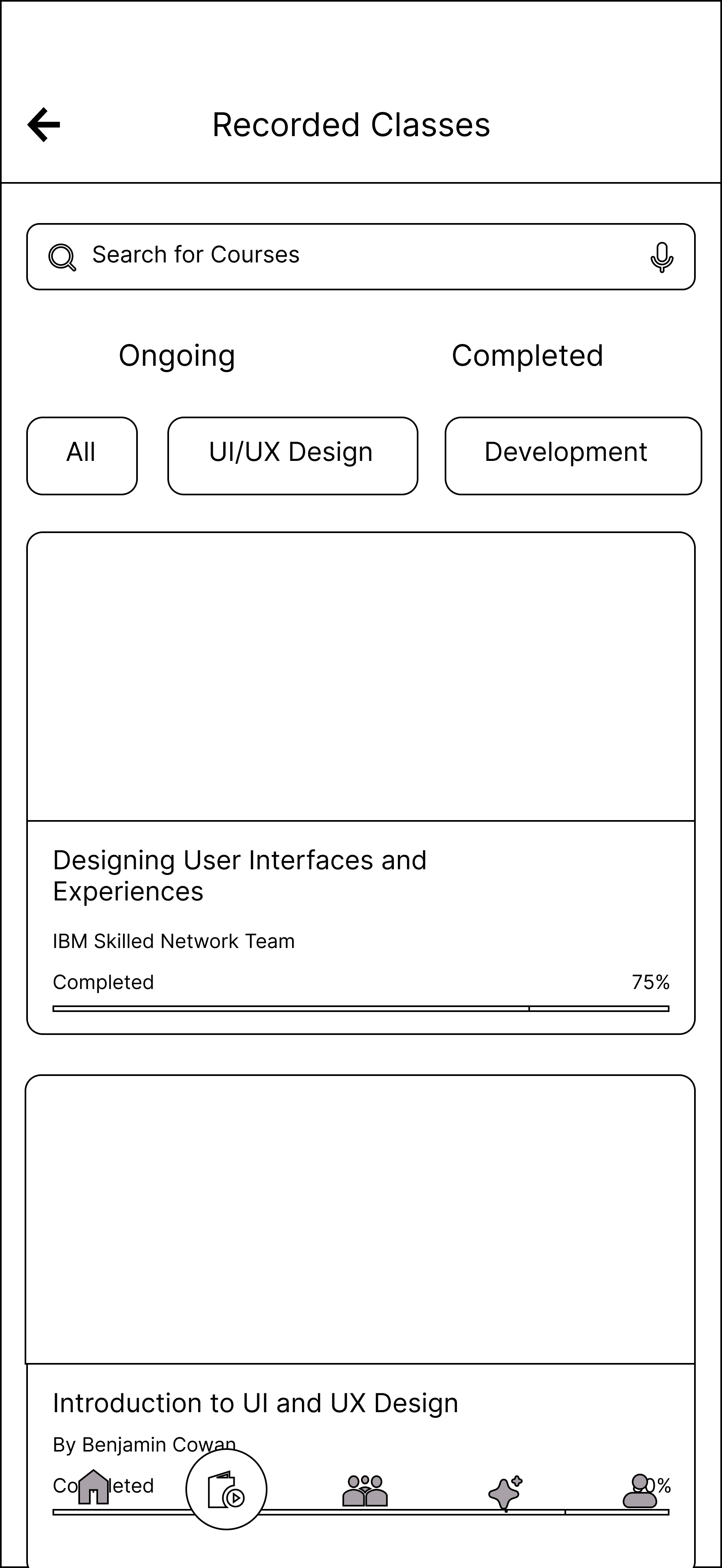
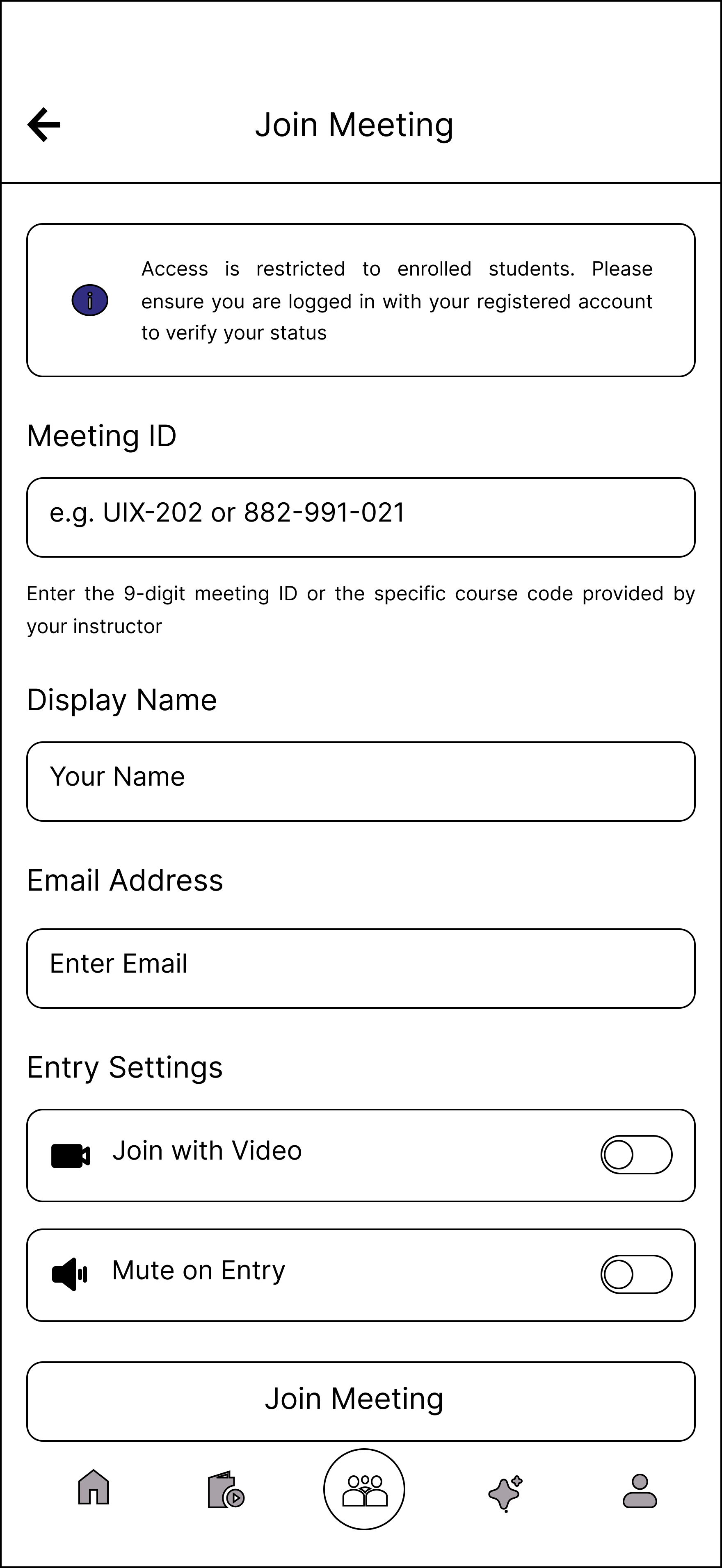
Finding the balance between aesthetics and meaningful elements in the design is what I love to achieve. Colour, fonts and pixels all play a major role in meeting the needs of the user.